

Cannabis phosphorus deficiency drains the color and vigor from your plants right when they need to build roots and pack on buds. It reads as dark, purpling lower leaves, red-flushed stems and growth that stalls out. The good news is that it’s usually fixable once you know whether the phosphorus is missing or just locked out of the root zone.
This guide covers how to spot it, what causes it, how to correct it, and how to keep it from coming back.
The Short Answer:
Cannabis phosphorus deficiency shows first on older, lower leaves that darken to blue-green, then bruise purple, red or bronze, while stems flush red and growth stalls. Check your root-zone pH before adding anything, because a locked-out root zone mimics a true shortage. If pH is in range, feed a phosphorus-rich source and healthy new growth returns in about a week.
What Is a Cannabis Phosphorus Deficiency?

A cannabis phosphorus deficiency happens when the plant cannot pull enough phosphorus (P) from its root zone to meet demand. Phosphorus is the “P” in the N-P-K ratio printed on every bottle of nutrients, and the plant leans on it hardest during germination, root building and flowering.
When supply runs short, the plant strips phosphorus from its oldest leaves and sends it to new growth and developing buds. That salvage process is exactly what produces the dark, purpling lower leaves that signal the problem.
Phosphorus drives energy transfer, root development and bud formation across the plant’s life. A short supply during flowering caps bud size and lowers the final yield. The deficiency stays rare in a well-managed grow, but it turns costly fast once it sets in. Catching it on the lower leaves early is what keeps it from climbing the plant.
What Causes Phosphorus Deficiency in Cannabis?
Phosphorus deficiency in cannabis usually traces back to a root zone that can’t deliver phosphorus, not to soil that lacks it. The most common triggers are an off-range pH, cold root temperatures, overwatering and soggy or compacted soil.
Cold is a frequent culprit: once the root zone drops below about 50°F, phosphorus uptake stalls even when plenty is present, and a sudden temperature swing makes it worse. Cool roots above that mark still slow absorption, so keeping the root zone warm matters.
Excess iron (Fe) can also tie up phosphorus in forms the roots can’t absorb, especially in acidic soil. A salt buildup from heavy feeding does the same thing, accumulating around the roots and choking absorption.
In every one of these cases the phosphorus is often already there, but the roots can’t reach it. That distinction decides how you fix it.
How pH Lockout Causes Cannabis Phosphorus Deficiency
pH lockout happens when the root-zone pH drifts outside the band where roots can absorb phosphorus, so the nutrient sits in the medium unused and the plant shows deficiency symptoms even when phosphorus is plentiful.
Cannabis takes it up best at a soil pH of 5.5 to 6.5 (with 6.0 to 6.3 the sweet spot), or a hydro pH of 5.6 to 6.4 (ideal 5.8 to 6.2). Let soil drift into the 6.3 to 6.7 band and micronutrients like iron, zinc and manganese start locking out, so climbing too high causes its own trouble.
This is why growers check pH before adding anything, dosing more phosphorus into a locked-out root zone fixes nothing and only pushes salt levels higher.

ONE KIT, FULL GROW
- Full-cycle nutrition, no guesswork
- Sweeter, more flavorful buds at flower
- Matched formulas designed to work together
- Perfect for soil, coco, and soilless media
Signs of a cannabis phosphorus deficiency

Phosphorus deficiency signals itself through a predictable sequence that starts low on the plant and climbs. The symptoms below appear in a rough order, so spotting the early ones lets you act before the damage spreads:
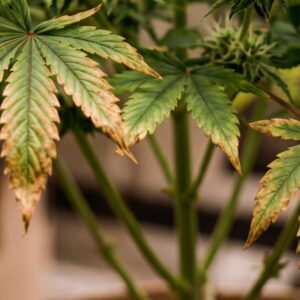
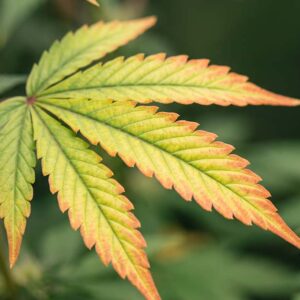
- Leaf color shift — older, lower leaves darken to blue-green, then develop purple, red or bronze patches.
- Stem and stalk discoloration — petioles and stems flush purple or red from the base upward.
- Slowed growth — new leaves come in small, and overall growth stalls.
- Leaf death — the lowest, worst-hit leaves yellow between patches, curl, and drop off.
One caveat matters before you diagnose: some cannabis strains carry natural purple or red coloring in their stems and leaves. Know what’s normal for your genetics, so you don’t chase a deficiency that was only ever cosmetic.
Why Cannabis Leaves Turn Purple, Red or Dark
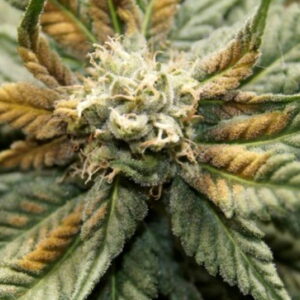
Cannabis leaves turn dark, purple or red during phosphorus deficiency because the plant pulls phosphorus out of its oldest tissue first. The lower leaves lose their bright green, deepen to a blue-green or gray, then bruise into purple and red tones as the pigment balance shifts.
During flowering, it often shows up most on the leaves taking direct light, since anthocyanin (the purple pigment that flags the deficiency) builds up more under strong light. The shortage itself isn’t confined to those leaves, but that pattern is still a useful tell that phosphorus, rather than another nutrient, is the shortfall.
Red Spots and Bronze Patches on Cannabis Leaves
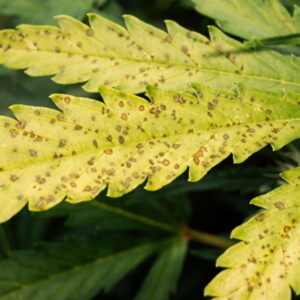
Red spots and bronze patches form on the lower leaves as phosphorus deficiency advances past the initial darkening. The blotches thicken and spread across the leaf surface in bronze, purple or brown, while the areas between them yellow out.
Similar spotting can also come from a calcium deficiency, so the leaf position matters for telling them apart. Phosphorus damage starts on old, lower growth, while calcium damage strikes new, upper growth first.
Purple and Red Stems from Phosphorus Deficiency
Purple and red stems appear as phosphorus deficiency moves from the leaves into the plant’s structure. The discoloration usually begins in the petioles and main stem near the base, then works its way up. On a phosphorus-starved plant this stem color pairs with darkening lower leaves and stalled growth, which separates it from ordinary strain coloring.
When the stems flush but the leaves stay healthy and green, suspect genetics before you suspect a shortage.

Below is a quick cheat sheet that maps each symptom to where it shows up and what it tells you, so you can match your plant against it quickly.
Dark blue-green leaves
- Where: Lower, older leaves first
- Indicates: Early phosphorus deficiency
Purple, red, or bronze patches
- Where: Lower leaves, spreading upward
- Indicates: Progressing deficiency
Yellowing between patches
- Where: Lower leaves
- Indicates: Tissue dying off
Purple or red stems and stalks
- Where: Starting at the base and moving upward
- Indicates: Structural-stage deficiency
Small new leaves and slow growth
- Where: Top of the plant
- Indicates: Ongoing phosphorus shortfall
Curling and dropping lower leaves
- Where: Bottom of the plant
- Indicates: Advanced, untreated deficiency
Phosphorus Deficiency vs. Other Cannabis Deficiencies
Phosphorus deficiency shares surface symptoms with several other cannabis nutrient problems, so leaf position and color pattern are what separate them.
All these deficiencies affect leaf color and health, but each hits a different part of the plant in a different way. Reading those differences correctly is what stops you from feeding the wrong nutrient.
Phosphorus and nitrogen deficiency both start on the lower leaves, but nitrogen turns them a uniform pale yellow while phosphorus darkens them and adds purple tones. A potassium deficiency burns the leaf edges and tips brown rather than patching the leaf body. Calcium damage lands on new upper growth instead of old lower growth.
You fix phosphorus deficiency in cannabis by correcting the cause first, then replenishing phosphorus if a true shortage remains. Because a locked-out root zone looks identical to an empty one, the order of operations decides whether the fix works.
Check pH and root temperature before you reach for a bottle, then feed only if the root zone is healthy and still short. The damaged leaves won’t recover, so you judge success by the new growth that follows.
Correcting pH to Fix Phosphorus Lockout
Correct the root-zone pH first, since a pH problem blocks phosphorus even when plenty is present. Aim for a soil pH of 6.0 to 6.3 (up to 6.5 still works), or 5.8 to 6.2 in coco and hydro.
How you get there depends on your medium. Living, organic soil buffers its own pH through root-zone microbes, so you don’t pH the water. If the soil itself has drifted, correct it with slow-acting amendments (lime to raise it and elemental sulfur to lower it).
In coco, hydro, or soil fed synthetic nutrients, correct pH at the feed instead. Mix your nutrients into the water, then adjust that solution with pH Up or pH Down until it reads on target before watering.
Salt buildup is a separate problem. If your runoff EC is climbing well above what you fed in, flush the medium with clean, pH-balanced water until about 30% drains out to wash the excess salts clear. Don’t add nutrients to a flush, and don’t rely on a flush to fix pH; once the salts are gone, resume feeding at the correct pH.
Adding Phosphorus Sources to Cannabis Soil
Add phosphorus only after the root zone checks out, using a bloom or flowering formula that carries extra P.
A cannabis-specific nutrient system works well here because bloom formulas are built with the higher phosphorus load flowering plants demand. Slower-release options like rock phosphate, bone meal, worm castings and guano feed phosphorus in slowly rather than all at once.
In cold conditions you can’t avoid, a soluble phosphorus source helps the plant take up what it needs despite the chill.
Fixing Phosphorus Deficiency in Flowering Cannabis
Fixing phosphorus deficiency during flowering takes priority because the shortfall directly limits bud size and yield. The lower leaves show symptoms first, so catching the deficiency there lets you correct it before the bud sites above are affected. A phosphorus-rich bloom feed, applied once the pH is confirmed in range, is the fastest correction at this stage.
Hold off on stripping damaged fan leaves until new growth recovers, so the plant keeps every working leaf it has during bloom.
Can Cannabis Get Phosphorus Toxicity?

Yes, cannabis can get phosphorus toxicity, though it’s far less common than deficiency and almost always comes from over-feeding.
Too much phosphorus burns the plant and can push buds toward a harsh, chemical taste at harvest. Excess phosphorus also blocks the uptake of other nutrients, so a P overdose can trigger secondary shortages that look like fresh deficiencies.
If you’ve been heavy-handed with bloom nutrients, phosphorus toxicity can shade into general nutrient burn, and the fix is the same: flush with fresh, pH-corrected water and cut the feed back. The safest rule is simple: never add extra phosphorus unless the plant is clearly showing a deficiency.
How Long Does Cannabis Take to Recover from Phosphorus Deficiency?
Cannabis starts pushing healthy new growth within about a week of a corrected phosphorus deficiency. The leaves already damaged won’t turn green again, so you watch the fresh growth to judge whether the fix worked. Once new, healthy leaves come in, prune the worst-damaged old leaves so the plant can redirect light and energy to the recovering canopy.
If fresh upper leaves keep showing damage after the fix, look past phosphorus to a calcium deficiency, which strikes new growth rather than old.
Preventing Phosphorus Deficiency Starts with Healthy Cannabis Seeds
Preventing phosphorus deficiency starts with vigorous genetics and a stable root zone, long before the first symptom could appear. Strong plants grown from quality cannabis seeds resist stress better and hold steadier through the phosphorus-hungry flowering stretch.
Keeping pH in range, root temperatures above 60°F and feeding balanced through the cycle prevents most deficiencies from ever taking hold, provided growing is legal where you are. A balanced nutrient system carried across the grow keeps phosphorus and every other nutrient available when the plant calls for it.
Seed type also shapes how you plan for phosphorus demand. Feminized marijuana seeds are bred to grow into female, flowering plants, so you know phosphorus demand will climb as they move into bloom.
Auto cannabis seeds run a shorter, compressed cycle from seed to harvest, so bloom arrives fast and there’s less time to recover from an early feeding slip, which makes steady phosphorus from the start matter more.
Frequently Asked Questions
Why Are My Cannabis Plant’s Stems Turning Purple?
Purple stems on a cannabis plant point to either a phosphorus deficiency or natural strain coloring. When purple or red stems come alongside darkening lower leaves and slowed growth, phosphorus deficiency is the likely cause. When the stems flush but the leaves stay green and healthy, the color is probably just your genetics. Check the leaves before you treat.
Can Phosphorus Deficiency Turn Cannabis Leaves Red?
Yes, phosphorus deficiency can turn cannabis leaves red, along with purple and bronze tones. The color change starts on the older, lower leaves as the plant pulls phosphorus from them to supply new growth. The red and purple patches thicken and spread as the deficiency advances. Red on new upper growth instead usually points to a different nutrient issue.
What pH Is Best for Phosphorus Uptake in Cannabis?
Cannabis absorbs phosphorus best at a soil pH of 5.5 to 6.5 (ideal 6.0 to 6.3), and a coco or hydro pH of 5.6 to 6.4 (ideal 5.8 to 6.2). Outside that range, the roots can’t take up phosphorus even when it’s present in the medium. This is why a pH check comes before any feeding when you suspect a deficiency. Correcting the pH often resolves the problem on its own.
How Do I Tell Phosphorus Deficiency Apart from Other Cannabis Deficiencies?
Tell phosphorus deficiency apart by where it lands and what color it turns. Phosphorus darkens the lower, older leaves and adds purple tones, while nitrogen turns them a uniform yellow and potassium burns the edges brown. Calcium problems hit new upper growth instead of old lower growth. Matching the leaf zone and color pattern to the plant narrows it down fast.
Can You Give Cannabis Too Much Phosphorus?
Yes, you can give cannabis too much phosphorus, and the excess burns the plant and blocks other nutrients. Over-feeding bloom formulas is the usual cause, and it can sour bud flavor at harvest. Too much phosphorus can also trigger secondary deficiencies that look like new problems. Flush with fresh, pH-corrected water and cut back the feed to correct it.
Thanks for reading. Please leave comments or questions below and don’t forget to download my free grow bible
Robert
THANKS!!!
Ive looked high and low for good photos of my troubled leaves and your pictures and article helped me identify the exact problem.
Awesome info but blood meal is not a good source of phosphorus
Very informative
I yaed foxfarm soil but i believe my problem was over Watering her 🙁 or do You Guys recommend different soil?
Thank you for sharing your knowledge. Peace and happiness brother!
I have had a few grows under my belt, but with my latest one, im having serious trouble with this darkning of the leaves, please help
How do you fight phosphorus deficiencies on outdoor plants.
Tom,
More info would be nice. As simple as your question is; I have to say add; Phosphorous.?.?.? Maybe it would be a good idea to join our forum at ILGM.
Happy growing
[…] Three foundational nutrients that you will need to focus on are nitrogen (N), potassium (P), and phosphorus (K). The fewer these nutrients, the less weed you will […]
[…] used by growers to describe the nutrients that cannabis plants need the most. This list includes phosphorus, nitrogen, potassium, magnesium, calcium, and sulfur. Micronutrients refer to the remaining […]
[…] second element is Phosphorus or P in the periodic table with an atomic number of 15 and an approximate atomic mass of 31. Its […]
[…] To take care of phosphorus deficiencies, try to use a fertilizer which contains a higher ratio of phosphorus than whatever you were using before. Fertilizers specifically developed for the flowering phase work well, as does bat guano. Water-soluble fertilizers will be your best option for maximum efficiency and ease of use. Read more about phosphorus deficiencies in marijuana plants […]
[…] Phosphorus deficiency […]
I have an auto flower blueberry just transplanted to a bigger pot I think I have a cal-mag or phorphous bcuz the yellowing and rust spots in the center of the leaves also they look sad and dropped over plz help and how can I send u a pic sou can see what I mean
Where might I get some root shooter grow cubes