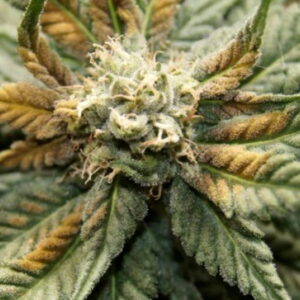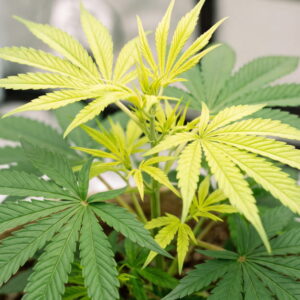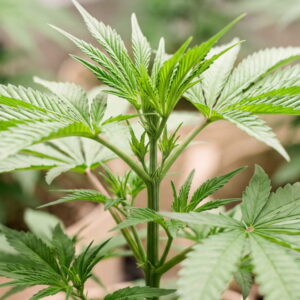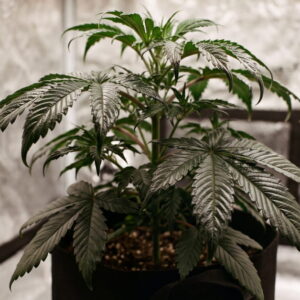
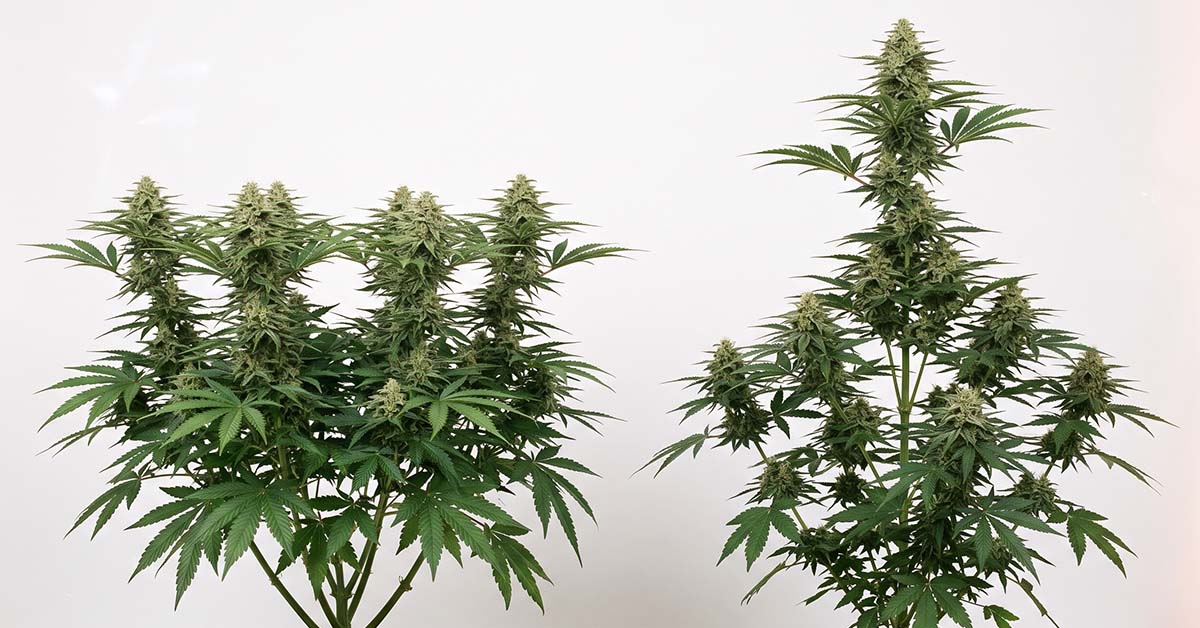
In cannabis cultivation, topping splits the main stem into two during the vegetative stage and gives you multiple main colas where one grew before. One cut breaks apical dominance and redirects the plant’s energy from a single dominant top to multiple bud sites. That’s the primary difference between topped plants vs non-topped plants. In this guide, you’ll learn:
- When to top weed plants
- How to do it right (with steps)
- Why topping leads to heavier harvests
- How topping vs FIMming compares
By the end, you’ll know whether topping fits your grow, which seed types respond best and how to avoid the most common timing mistakes.
What is Topping a Cannabis Plant All About?
Topping a cannabis plant is all about cutting the main growing tip off the plant to split one stem into two. That cut breaks apical dominance, the process that drives most of the plant’s energy toward one dominant stem.
Without the growing tip, the plant redirects its growth hormones (auxins) to the two nodes just below the cut. Each of those nodes develops into its own main stem. That’s why topping produces a wide, flat plant with multiple bud sites rather than a single towering stem.
It’s one of the most effective training techniques you can use when growing weed indoors or outdoors.
Topped Plant vs Non-Topped: What’s the Difference?
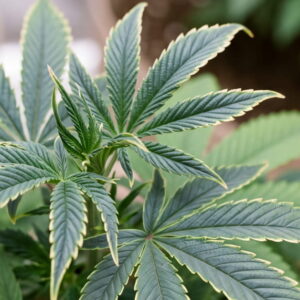
A topped cannabis plant grows multiple main colas from a wide, flat canopy rather than a single central stem. An untopped plant grows tall and narrow, with one dominant main cola and smaller side branches below it.
Under a grow light, the main cola of an untopped plant sits close to the lamp while the lower branches develop in partial shade. That limits how much light the lower bud sites receive and lighter, less-developed buds are the result.
A topped plant flattens the canopy so every main cola competes for the same light intensity.
The yield difference between topped and untopped plants comes down to bud site quality. More colas at canopy level means more fully developed flower sites at harvest. Outdoors, the same logic applies: a wide canopy exposes more bud sites to direct sunlight throughout the day.
Okay, But When Should You Top Your Cannabis Plants?
Topping gives you the best results during the vegetative stage, once your plant has developed 4 to 6 healthy nodes. At this stage, the root system is strong enough to handle the stress of topping. The plant also has enough time in veg to develop the new colas before the flip to flower.
Here’s what this section covers:
- How many nodes to wait for (the primary timing signal before you make the first cut).
- What week to top indoors (a week-by-week guide for most indoor grows).
- Whether you can top during flower (the short answer is no).
- When to top outdoor cannabis plants (how the natural light cycle changes the timing).
How Many Nodes Do You Need Before Topping?
Most growers top their cannabis plants above the 4th or 5th node for the best recovery and cleanest cola structure. Waiting for node 5 or 6 gives the plant more structural support for faster recovery.
Don’t top below node 4, as the seedling hasn’t built enough root mass at that stage to handle the stress reliably. Node count is the most reliable timing signal because different strains develop nodes at different rates.
What Week Should You Top Cannabis Plants Indoors?
Indoor growers typically top cannabis plants around week 3 to 4 of the vegetative stage. Week 4 is the safer bet since the root system has had more time to establish.
A healthy fast-growing plant might be ready at week 3, while a slower strain may need week 5 or 6. Use the node count as your primary guide and the week count as a backup check.
Can You Top Cannabis During the Flowering Stage?
No, topping cannabis during the flowering stage reduces yields because the plant has shifted all its energy toward bud development. At this point, the plant is no longer producing new vegetative stems, so there’s nothing to redirect into new colas.
Cutting growth during flower stresses the plant at a critical time and typically slows bud development across every active site. If your plant has stretched too tall after the flip, bending and tying branches down with low-stress training (LST) is the only low-risk option you have left.
When to Top Outdoor Cannabis Plants
Outdoor cannabis plants benefit from topping in early to mid-vegetative growth, before the pre-flower stretch begins. In the Northern Hemisphere, that window typically falls between late April and early June for most photoperiod strains. Time your first topping for when the plant reaches 4 to 6 nodes.
If you’re planning a second session, finish it at least 4 weeks before the plant starts showing pre-flowers. Topping too close to the natural transition means the plant moves into flower before the new colas have fully established.
How to Top a Cannabis Plant Step by Step
Topping a cannabis plant takes one sharp tool and one clean cut just above the node you want to branch from. Here’s the full process:
- Wait for 4 to 6 nodes and confirm the plant is healthy. A stressed or sick plant should recover before you top it.
- Count the nodes from the base and identify the one you want to top above.
- Sterilize your scissors or pruning shears with isopropyl alcohol. A clean tool prevents infection through the exposed stem.
- Cut at a 45-degree angle, 1 to 2 cm above the chosen node. The angle promotes faster healing and stops water from pooling on the cut surface.
- Watch for two new growth tips to emerge from the node below the cut within 5 to 7 days.
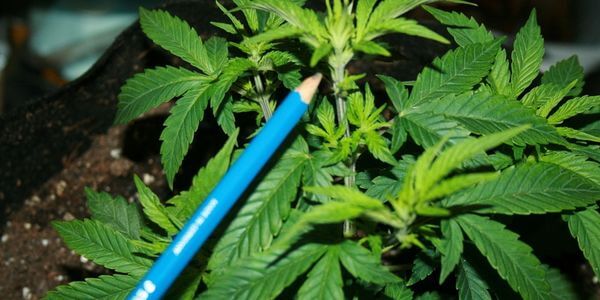
Make the cut just above the node, not through it. Leaving 1 to 2 cm of stem above the node protects the branching point as the wound heals.
That’s the full process. Two new growth tips will push out from the node within a week, and each develops into its own main stem from that point forward.
What to Do After Topping Cannabis
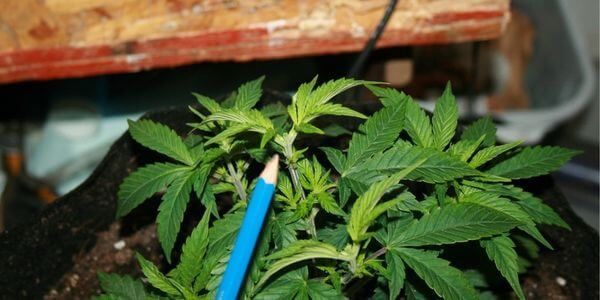
After topping, give your plant a stable environment and consistent watering for the first 5 to 7 days. Don’t add any additional training during the recovery period since the plant needs time to rebuild before facing more stress.
Recovering plants are more sensitive to nutrient imbalances, so watch for early signs of a cannabis deficiency before it slows new branch development. Keep a steady feeding routine with balanced cannabis fertilizers to give the two new shoots everything they need to develop into strong main branches.
How Many Times Can You Top a Cannabis Plant?
Most growers top their cannabis plants 2 to 3 times, with 1 to 2 weeks of recovery between each session. Each topping doubles the main cola count: one session gives you 2 colas, two sessions give you 4 and three sessions give you 8.
The practical upper limit is 3 to 5 sessions, after which the recovery time eats into your vegetative window. Stop topping at least 2 weeks before flipping to flower so the new colas can establish before bud development begins.
Manifolding takes multiple topping sessions even further, building a structured symmetrical canopy from a single origin point. It’s a more advanced process with its own planning steps, but the core principle is the same as every technique on this page.
Can You Top Autoflower Cannabis Plants?
Yes, you can top autoflower cannabis plants, but most experienced growers skip it because autoflowers flower by age rather than light cycle. That matters because topping needs a recovery window, and most autoflowers have just 2 to 4 weeks of vegetative growth before flowering begins.
Topping too early risks stunting a plant that’s still fragile. Topping too late means the plant transitions to flower before the new colas can develop. Significant stress from topping can also increase the risk of developing the early signs of a hermie plant in certain genetics.
The safer approach for autoflowers is LST, low-stress training that bends and ties branches down to flatten the canopy without cutting the plant. You can start LST as soon as the plant has a few branches, and it works with the plant’s natural growth instead of interrupting it.
FIMming carries similar timing risks for autoflowers, so it’s not a reliable workaround. Growers focused on autoflower cultivation will find a wide range of fast-finishing options when they’re ready to buy autoflower seeds.
FIMming vs Topping Cannabis: Which is Better?
Both FIMming and topping break apical dominance in cannabis plants, but they differ in how much you remove and how many new colas form. Neither technique is objectively better. The right choice depends on your grow goals and how much structural control you want from the canopy.
What is FIMming a Cannabis Plant?
FIMming removes around 80% of the plant’s newest growth tip, leaving only the bottom 20% intact. Where topping cuts cleanly through the full stem above a node, FIMming takes most of the tip without severing it completely. The result is 3 to 4 new growth points instead of a clean 2-cola split.
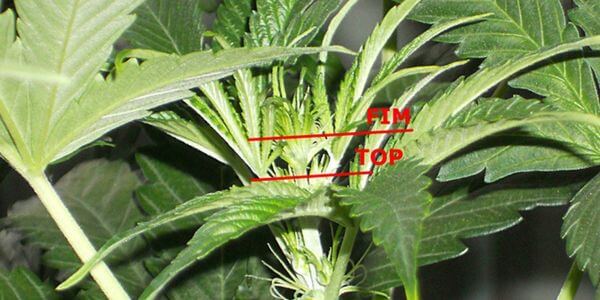
FIMming causes less structural stress than a full top because the main stem stays mostly intact during the cut. The name is short for ‘F**k, I Missed’ — a phrase growers used when the cut removed too little. It was an accident that became a repeatable technique.
Should You FIM or Top Your Cannabis Plant?
Choose topping when you want a clean, symmetrical structure with two defined main colas and a predictable recovery. Choose FIMming when you want more new growth points with less recovery time and don’t mind a less uniform canopy structure.
Topping is the better choice for multiple-session plans or when precise canopy control matters. FIMming suits early veg work, single-session training and growers who want to experiment with less commitment than a full cut. Both combine well with LST: tying the new branches outward after either technique flattens the canopy and equalizes light across bud sites.
Which Seeds Work Best with Topping?
Photoperiodic feminized seeds give you the most control over the vegetative stage and the best conditions for multiple topping sessions. You control the length of veg by controlling the light cycle, which means more flexibility for topping sessions and recovery between them.
You won’t need to identify male vs female cannabis plants mid-veg, either. Every plant you top is already a female, so no training time is wasted on plants you’d pull before harvest.
And with photoperiod genetics, you can extend veg for as many training sessions as your grow setup needs. If you’re planning to buy feminized seeds, look for varieties with vigorous vegetative growth for the best topping results. After all, a longer veg window means more sessions and more colas.
Growers who prefer the simplified autoflower lifecycle will find LST a better fit than topping for their training approach.
Whatever route you choose, you can buy cannabis seeds at ILGM suited to every experience level, preference and grow setup. Just be sure to check your applicable federal, state and regional laws before placing an order or popping a seed.
Frequently Asked Questions About Topping Cannabis
How Long Does a Topped Plant Take to Recover?
Most cannabis plants recover from topping in 5 to 10 days, depending on the strain’s vigor and the grow environment. Stronger, healthier plants with well-developed roots bounce back in 5 to 7 days. Younger plants or those in suboptimal conditions may take up to 2 weeks before new growth becomes visible.
Does Topping Slow Down Weed Plant Growth?
Topping does temporarily slow vertical growth, usually for 3 to 7 days while the plant redirects energy to the two new shoots. After that pause, growth resumes with the energy split between the two new stems rather than the original one. Most growers find the slight delay worthwhile given the structural benefits at harvest.
How Does Mainlining Differ from Topping?
Mainlining, also called manifolding, uses repeated topping sessions to build a symmetrical canopy from a single base node. Standard topping gives you two new colas per cut without a fixed plan for how the canopy ultimately develops. Mainlining plans the cola count in advance and builds everything from that single base node for uniform structure across the plant.
Is Pinching the Same as Topping a Cannabis Plant?
Pinching and topping both target the main growing tip, but they differ in technique and outcome. Topping makes a clean cut with sterile scissors above a node, splitting the stem into two. Pinching bruises or crushes the growing tip rather than removing it cleanly, which produces a less predictable response and a higher infection risk.
Can Topping Cannabis Plants Trigger Hermaphrodism?
Topping can contribute to hermaphrodism in stress-sensitive strains, but it’s not a direct cause under normal conditions. Well-timed topping on a healthy plant rarely triggers hermaphroditic expression. Genetics with low stress tolerance are more vulnerable when topping is combined with heat, light burn, or disrupted light cycles.
When Should You Stop Topping Before Flower?
Stop topping at least 2 weeks before flipping to flower, and extend that buffer to 3 to 4 weeks after a final session. Transitioning to flower too soon after topping means the plant starts bud development before the new colas have fully established. As a rule of thumb, the plant should show vigorous new growth from the topped nodes before you flip.
Can You Top Cannabis Seedlings?
No, you shouldn’t top cannabis seedlings. At the seedling stage, the plant hasn’t developed enough root mass or structural strength to handle the stress of topping reliably. Wait until the plant has at least 4 nodes before making any cut, and confirm the plant looks healthy before you proceed.
How Does Topping Differ from Super Cropping?
Topping removes the growing tip to split a stem into two new colas. Super cropping bends or gently snaps a branch so it lies horizontal, putting the bud in a better position to receive direct light. The plant reinforces the damaged area as it heals, and the repaired section ends up structurally stronger than it was before. Both techniques stress the plant to encourage better yield, but topping changes structure while super cropping reinforces it.