
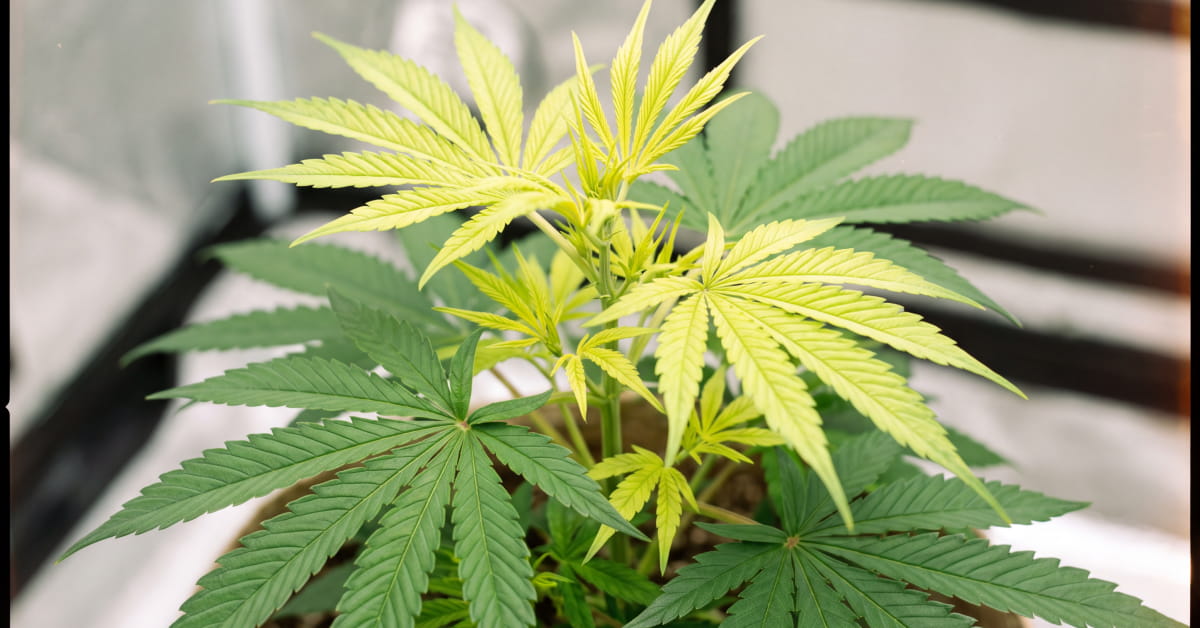
Cannabis sulfur deficiency is uncommon, but when it shows up it slows growth and pales out the newest leaves at the top of the plant. Sulfur helps build proteins, chlorophyll and strong new tissue, so a shortage leaves the plant struggling to grow the way it should. The good news is that it’s one of the easier problems to correct once you spot it.
Short and simple: rule out a naturally low-sulfur medium first, since that’s the more common cause for this nutrient specifically. Then feed a sulfur source like Epsom salt. Recovery is slow, so give it several days before judging the results.
What Is a Cannabis Sulfur Deficiency?
A cannabis sulfur deficiency develops when the plant cannot take up enough sulfur to build proteins, chlorophyll and healthy new growth.
Sulfur is a secondary nutrient, which means the plant needs a steady supply throughout the vegetative stage even though it uses less of it than nitrogen. When that supply runs short, the newest leaves lose color first and overall growth slows down.
Sulfur does quiet but important work. It supports root development, helps form the chlorophyll that keeps leaves green and drives the protein-building the plant relies on to grow. A plant short on sulfur can’t keep up with any of those jobs, so the symptoms tend to show across new growth rather than in one spot.
Download my free marijuana grow bible to know more about sulfur deficiency and other nutrient problems.
What Are the Signs of Cannabis Sulfur Deficiency?
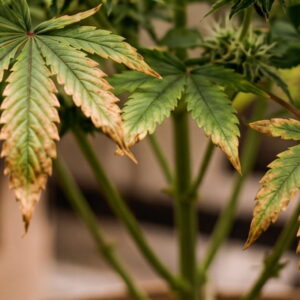
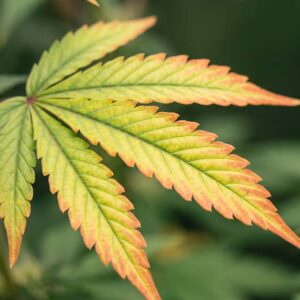
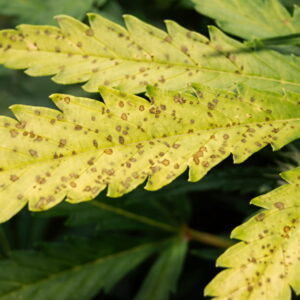
Cannabis sulfur deficiency starts as an even, whole-leaf yellowing that runs from pale green to full yellow. Because it hits the newest growth first, older leaves lower down keep their color longer. This top-down pattern is a strong first clue, though you’ll want to confirm it against the pattern of yellowing too.
As the shortage continues, new leaves thin out and turn fragile, and growth slows across the whole plant. Some leaves shift toward orange or pink, and in more severe cases the yellowing spreads and the veins can discolor. Stems often keep stretching taller but stay thin and woody instead of thickening.
If the plant is flowering, a sulfur shortage can stall bud development and hold back the plant’s overall size. Catching it early, while the yellowing is still limited to the newer leaves, keeps the correction simple.
One caveat on “top”: sulfur hits the newest leaves first, and on most plants that’s the top. On plants that have been topped or trained, the newest growth can sit lower or off to the sides, so look for the youngest leaves rather than only the tallest ones.
How to Tell Sulfur Deficiency From Nitrogen, Magnesium and Iron
Both sulfur and iron deficiencies hit new growth first, while nitrogen and magnesium deficiencies begin on the old lower leaves. All four cause yellowing, but they each have defining symptoms.
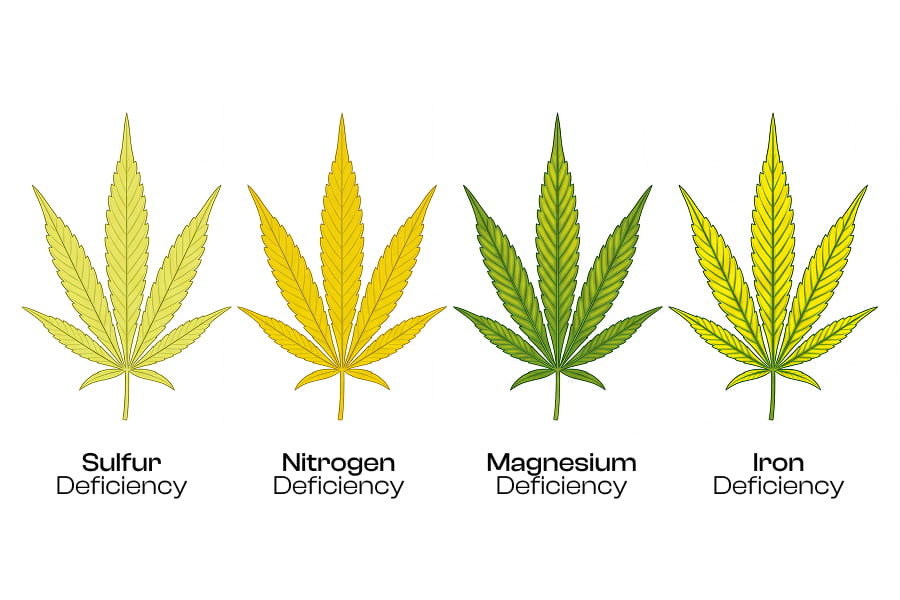
The differences below can help growers distinguish sulfur deficiency from nitrogen, magnesium, and iron deficiencies based on where symptoms appear and how the yellowing develops.
Sulfur deficiency
- Where it starts: Younger leaves, then spreads through the plant
- Yellowing pattern: Even, whole-leaf yellowing
- Veins: Stay green early but may yellow later
Nitrogen deficiency
- Where it starts: Older, lower leaves
- Yellowing pattern: Even yellowing, starting with older growth
- Veins: Yellow along with the rest of the leaf
Magnesium deficiency
- Where it starts: Older or middle leaves
- Yellowing pattern: Yellowing between the veins
- Veins: Stay green, creating an interveinal pattern
Iron deficiency
- Veins: Stay sharply green
- Where it starts: New, upper leaves
- Yellowing pattern: Bright yellowing between the veins
Confirming the pattern before you feed keeps you from adding the wrong nutrient and stacking a second problem on top of the first.
Also read the article Nutrient deficiencies in marijuana plants for a list with pictures of all deficiencies.
What Causes Sulfur Deficiency in Cannabis?
Cannabis sulfur deficiency usually comes down to naturally low sulfur in the growing medium, a root-zone issue like heavy overwatering, or heat stress. Root-zone pH is usually not the culprit, but it’s still worth testing to rule it out.
- Root-zone pH: Sulfur doesn’t typically lock out at high pH, so don’t assume pH is the main suspect the way you might for other deficiencies. It’s still worth testing and ruling out, though.
- Low-sulfur medium: A light or heavily amended soil can run low on sulfur over a long grow, especially without a balanced feeding schedule.
- Overwatering and leaching: Frequent heavy watering may carry some sulfur down and away from the roots before the plant takes it up, though this matters far less than an underfed medium.
- Heat stress: Higher root-zone and leaf temperatures slow the plant’s ability to draw up sulfur even when enough is present in the medium.
How Do You Fix a Cannabis Sulfur Deficiency?
To fix a cannabis sulfur deficiency, correct the root-zone pH, rule out any environmental stressors and add a sulfur source before waiting for new growth to green up. Start with the pH check anyway. Although sulfur itself rarely locks out at high pH, a stressed root zone can mask or compound a straightforward feeding issue.
This section covers three parts of the fix:
- pH correction — getting the root zone into the range where sulfur is available
- Environmental stressors — ruling out and correcting overwatering or heat stressors
- Sulfur sources — what to feed and how much
- Sulfur toxicity — why more isn’t better, and how to avoid overcorrecting
How to Check and Correct pH So Sulfur Isn’t Locked Out
Sulfur itself doesn’t lock out at high pH the way phosphorus and the micronutrients do, so this step is just a fast way to confirm the root zone isn’t working against you before you commit to a feeding.
Sulfur stays available to cannabis roots in the 5.5 to 6.5 range in soil (6.0 to 6.3 is the sweet spot), and 5.6 to 6.4 in hydro and coco, with 5.8 to 6.2 ideal. Pushing soil pH toward 6.3 to 6.7 starts locking out micronutrients, so avoid drifting that high.
Test your runoff or reservoir, treating the reading as a warning light for drift rather than a target to chase. The way you bring pH back depends on what you grow in.
Organic or living soil buffers itself through the root-zone microbes, so the only way to fix real pH drift is by using dolomite lime (to raise pH) and elemental sulfur (to lower it). In coco, hydro, or soil fed synthetic nutrients, mix your feed first and adjust that solution with pH up or pH down. Recheck after the next watering.
Rule Out Environmental Stressors
If overwatering or heat stress is driving a sulfur deficiency, feeding alone won’t fully fix it. You need to correct the underlying condition.
Cut back on watering frequency and let the medium dry out more between waterings. Heavy, frequent watering is what leaches sulfur past the root zone before the plant can take it up. Aim for the medium to dry out somewhat at the surface before the next watering, rather than staying consistently saturated.
If root-zone or leaf temperature is running high, bring it down toward the 70 to 85°F range cannabis grows best in. Even a few degrees of correction can restore the plant’s ability to take up the sulfur that’s already present — sometimes without needing to add more at all.
Sulfur Sources That Correct the Deficiency
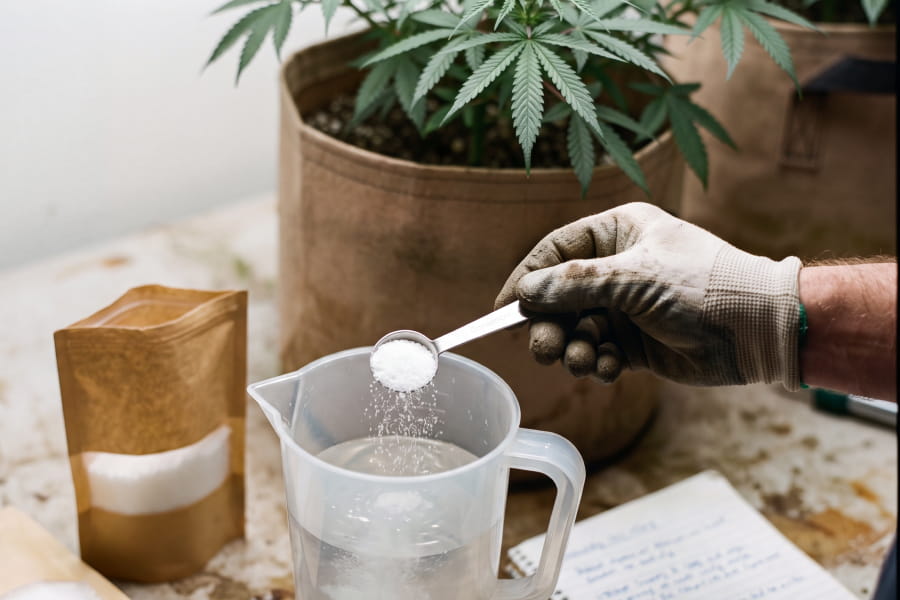
Epsom salt corrects most cannabis sulfur deficiencies at a rate of one teaspoon per gallon of water — either as a foliar spray or in your irrigation water. Epsom salt is magnesium sulfate, a cheap garden mineral that delivers both sulfur and magnesium in a form the roots take up quickly.
Once you’ve watered or sprayed the cannabis plant with the mix, wait for the new growth to respond. Any water-soluble fertilizer that contains sulfur works the same way, so you don’t always need a dedicated product.
If you’d rather amend the medium, a few other sulfur sources do the job:
- Elemental garden sulfur
- Gypsum
- Potassium sulfate
Gypsum comes with one hard limit: never apply it to soil with a pH below 5.5, because it can create conditions that harm the plant. Match the source to your setup, feed once and give the plant time before adding more.
Can Cannabis Get Too Much Sulfur? (Sulfur Toxicity)
Yes, cannabis can get too much sulfur, and the excess behaves a lot like salt stress. Too much sulfur stunts the plant, shrinks new growth and leaves the tips looking dark, brown and dead. It’s easy to cause by overcorrecting a deficiency with repeated heavy doses.
The fix for a deficiency is one measured feeding, not a daily one. Add your sulfur source, wait several days for the slow-moving nutrient to work, and only reassess after that. Treating gently keeps you from trading a shortage for a toxicity.
Give your weed plants a little extra love. Our marijuana fertilizer set has the perfect mix of nutrients to help you get the best yields.
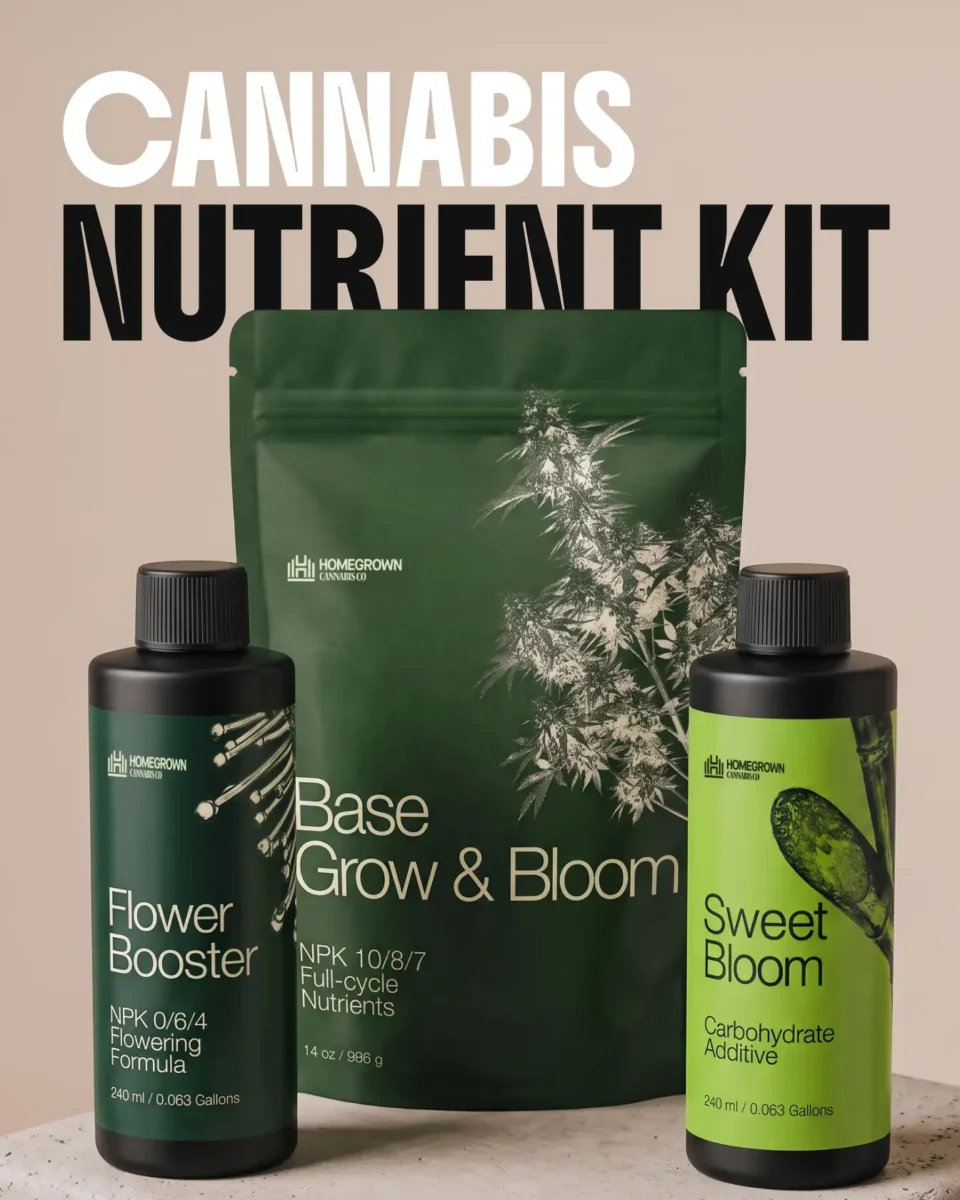
ONE KIT, FULL GROW
- Full-cycle nutrition, no guesswork
- Sweeter, more flavorful buds at flower
- Matched formulas designed to work together
- Perfect for soil, coco, and soilless media
How Long Does Cannabis Take to Recover From Sulfur Deficiency?
Cannabis recovery from a sulfur deficiency runs on a slow timeline, often three to seven days before the plant shows a clear turnaround. The newest leaves show the turnaround, greening up while the older damaged leaves stay pale. Judge progress by the fresh growth at the top, not by the leaves that already took the hit.
Once you’ve matched the symptom to the right cause, the plant usually settles back into steady growth.
How Healthy Genetics Lower Your Deficiency Risk
Healthy genetics give a cannabis plant a stronger start, which lowers how often nutrient problems like sulfur deficiency show up. A vigorous plant handles minor swings in feeding and pH more easily than a weak or unstable one. A strong start begins with quality marijuana seeds from stable genetics, available to eligible adult buyers where permitted by law.
Seed type also shapes the risk window. Faster-finishing autoflower weed seeds spend less time in the ground, so there’s a shorter window for a slow-building problem like sulfur deficiency to appear. Keep an eye on the newest growth and most issues stay small and easy to catch.
Choosing feminized cannabis seeds removes the guesswork of sexing plants, so growers spend their attention on feeding, pH and plant health instead of sorting out males.
None of this replaces good care, but starting with reliable genetics keeps most nutrient issues small and easy to catch. Feed a balanced mix of nutrients, watch the newest growth and act early if signs appear.
Cannabis Sulfur Deficiency FAQs
What Does a Sulfur Deficiency Look Like on Weed?
A sulfur deficiency shows up as pale, even yellowing on the newest top leaves, sometimes shifting toward orange or pink. Growth slows and stems stay thin, while the older lower leaves usually keep their color longer.
Is Sulfur Deficiency Common in Cannabis?
No, sulfur deficiency is relatively uncommon in cannabis compared to nitrogen, magnesium or iron problems. When it happens, it’s usually due to a naturally low-sulfur medium rather than pH lockout, because sulfur doesn’t lock out at high pH the way other nutrients do.
Can Epsom Salt Fix Sulfur Deficiency in Cannabis?
Yes, Epsom salt fixes most sulfur deficiencies: use 1 teaspoon per gallon of water, applied foliarly or during watering. It supplies both sulfur and magnesium, so it’s a common first choice, though any sulfur-containing water-soluble fertilizer works too.
What Is Sulfur Toxicity in Cannabis?
Sulfur toxicity happens when a plant takes in too much sulfur, and it acts like salt stress. The plant stunts, new growth shrinks and leaf tips turn dark and brown, usually from overcorrecting a deficiency with repeated heavy feeding.
Does Sulfur Deficiency Happen More in Flowering?
Sulfur deficiency can appear in either stage, but its effects are more costly in flowering because a shortage can stall bud development. Keeping pH in range and feeding a balanced mix through bloom helps prevent it.
Grow weed plants with strong genetics to lessen the risk of dealing with plant diseases. Luckily we have an all-in-one care package for you: Bergman’s Complete Grow sets!
Have you dealt with sulfur deficiency on your cannabis plants? Please leave comments or questions below.
Happy growing!
Robert
My leaves are starting to go yellow and curl in the way,I have forgot to give calmag 3 feeds sin a row now I flushed them and PhD the water the run of was all between 6.71 and 6.81 and that was 6 plants,another have had a good flush and they are still the same with the yellowing amnon 2nd grow so I dont have a clue
What would the ratio of gypsum to water that you should Use to correct a defic in Your plant grown in soil
Jordan. Gypsum is the least recommended remedy. If you still want to use Gypsum, then I recommend finding a source and following directions on the bag.
You would be better off using Epsom salts, or sulfate of potash, or another nutrient blend as recommended above in the article.
Perhaps joining our forum would suit you better. Go here ilgmforum.com
Stems woody on 3ft plant
[…] Sulfur deficiency […]
I am currently waiting for my order of Marijuana Booster to arrive. My question is about the water I mix it with . I have a chlorine scrubber to remove the chlorine from my tap water. DOES MARIJUANA BOOSTER adjust the Waters PH for growing indoors in soil OR should I find a way to test and if needed adjust my waters PH & if so what is the recommend PH for my water when I am using your Marijuana Booster ???
Leaves at bottom of plant are turning yellow and brown at the ends can some1 help