
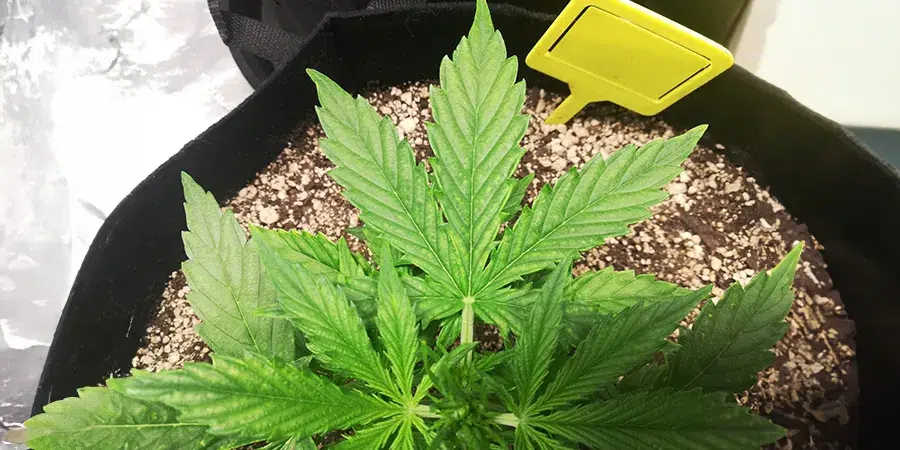
Magnesium deficiency in marijuana plants shows up as yellowing between the veins on the lower, older leaves while the veins themselves stay green. Magnesium is the nutrient that builds chlorophyll and drives the enzyme reactions behind photosynthesis, so a shortage stalls new growth and drains color from the canopy.
This guide walks through the symptoms, the real cause behind most cases, and the corrective feeds that bring plants back.
Quick fix: Check pH first, aiming for 5.5 to 6.5 in soil (6.0 to 6.3 is ideal) or 5.6 to 6.4 in hydro and coco (5.8 to 6.2 is ideal), then feed Epsom salt or Cal-Mag if the yellowing keeps spreading.
What Is Magnesium Deficiency in Cannabis?
Magnesium deficiency in cannabis appears when the plant cannot draw enough magnesium to build chlorophyll and run its enzyme reactions.
Magnesium is a mobile nutrient, so the plant relocates it from old leaves to new ones when supply runs short. This movement explains why the symptoms surface first on the lower, older leaves near the bottom of the plant. Left unchecked, the deficiency climbs upward and the plant sheds its lower foliage quickly.
The deficiency can occur in any grow medium, including soil, coco and hydroponic systems, though it rarely appears outdoors in living soil. Indoor growers see it most because container media and filtered water hold less background magnesium.
Recognizing the pattern early is what keeps a minor issue from spreading through the canopy.
What Are the Signs of Magnesium Deficiency in Cannabis?
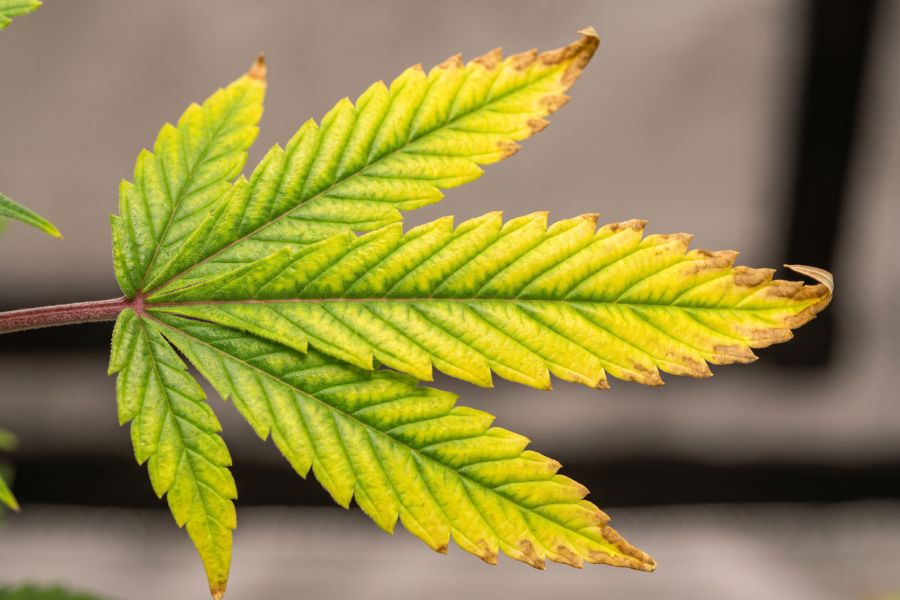
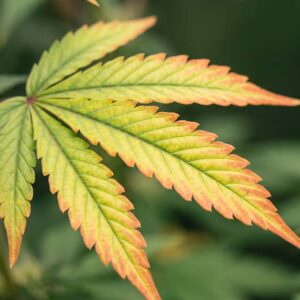
The clearest sign of magnesium deficiency is yellowing between the veins while the veins themselves stay green, a pattern called interveinal chlorosis. The tissue around each vein fades to pale green or yellow first. As the shortage worsens, the yellowing spreads up the plant and the affected leaf edges curl inward, feeling dry and crispy to the touch.
This crispy edging reads differently from nutrient burn, which shows as browning at the tips without the interveinal yellowing that marks a magnesium problem. A sulfur deficiency also causes leaf yellowing, but on newer leaves instead of older ones like magnesium.
Many growers also notice the petioles and stems turning red or purple alongside the yellowing, though this sign alone doesn’t point specifically to magnesium. Potassium deficiency, phosphorus shortages, cold stress, and cultivar genetics can all produce the same coloring, so treat it as confirming evidence alongside the interveinal yellowing.
In advanced cases, the leaf tips die back, and light brown spotting appears along the margins.
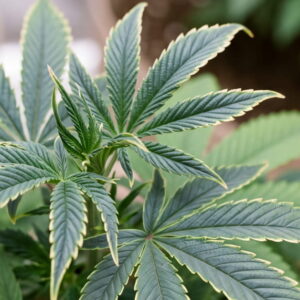
Some growers describe the curling as “taco leaves,” where the blade folds up along its center like a taco shell. That upward curl, paired with interveinal yellowing on the older growth, points strongly to a magnesium problem.
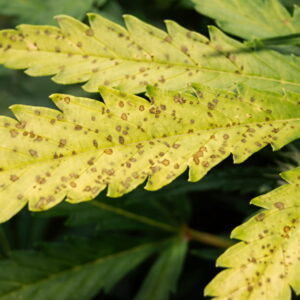
If newer top leaves also show large tan or brown spots, you may be seeing a calcium deficiency alongside magnesium, which the Cal-Mag section below covers.
What Causes Magnesium Deficiency in Cannabis?
Magnesium deficiency in cannabis usually comes from pH lockout at the roots, not a true shortage of magnesium in the medium. When root-zone pH drifts out of range, the roots cannot absorb the magnesium that is already present, so the plant behaves as if starved.
This is why adding more magnesium to a locked-out plant rarely helps and can trigger new problems. The three sections below cover the pH range magnesium needs, how overfeeding causes lockout, and why bright lighting raises demand.
- pH range: the absorption window that lets roots take up magnesium
- Overfeeding: how excess nutrient salts block magnesium uptake
- LED lighting: why high-output lighting can exacerbate a magnesium shortage
What pH Range Lets Cannabis Absorb Magnesium?
Cannabis roots take up magnesium best when soil sits between 5.5 and 6.5 (ideally 6.0 to 6.3) and hydro sits between 5.6 and 6.4 (ideally 5.8 to 6.2). Drift too far either way and magnesium locks out even with plenty in the feed.
The high side is the bigger risk, since rising pH shuts out magnesium and the micronutrients first. Keeping pH inside the correct range is the single most effective way to prevent and reverse most magnesium deficiencies. Test the runoff or reservoir regularly so drift gets caught before symptoms appear.
Can Overfeeding Cause Magnesium Lockout in Cannabis?
Yes, overfeeding cannabis can trigger magnesium lockout by loading the root zone with competing salts. When nutrient concentrations climb too high, excess salts crowd the roots and block magnesium from entering, even when magnesium is abundant. Adding still more nutrients at this point deepens the problem by shutting out other elements the plant needs.
Flushing with clean, pH-balanced water clears the excess so the roots can take magnesium up again.
Do LED Lights Increase Magnesium Demand in Cannabis?
No, LED lighting doesn’t raise a cannabis plant’s magnesium requirement or create a shortage on its own, although high light intensity can make an existing marginal shortage show up faster and hit harder — since magnesium-deficient tissue can’t process all that absorbed light energy efficiently.
That’s why growers running powerful LED panels can sometimes see a magnesium deficiency emerge faster than expected, but the light is exposing a feeding gap, not creating the demand from scratch.

ONE KIT, FULL GROW
- Full-cycle nutrition, no guesswork
- Sweeter, more flavorful buds at flower
- Matched formulas designed to work together
- Perfect for soil, coco, and soilless media
How Do You Fix Magnesium Deficiency in Weed Plants?
You fix magnesium deficiency in weed plants by correcting root-zone pH first, then feeding a magnesium source if symptoms persist. Because most cases are lockout rather than true shortage, resetting pH often resolves the yellowing on its own. When a genuine shortage remains, water-soluble magnesium supplements act fastest.
The three steps below cover the pH check, Epsom salt dosing, and when a flush is the better move.
- Check pH: confirm the root zone sits in the absorption window
- Epsom salt: deliver fast-acting magnesium when a true shortage remains
- Flush: clear salt buildup that blocks uptake
How Do You Correct pH to Fix Magnesium Lockout?
To clear magnesium lockout, get the root zone back into range: 6.0 to 6.3 in soil (5.5 to 6.5 is still fine), or 5.8 to 6.2 in coco and hydro. Test both the input and the runoff so you know where things actually sit.
The right correction depends on what you grow in. Organic soil regulates its own pH through the microbes at the roots, so you leave the water alone. If the soil pH has truly drifted, adjust it with slow amendments like lime (to raise pH) and elemental sulfur (to lower it).
In coco, hydro, or soil on synthetic feed, do it in the nutrient solution. Mix your feed, then bring that solution to target with pH-up or pH-down before it goes in. Once pH holds steady, the roots pick up magnesium on their own, so give the plant a few days before adding any supplement.
How Do You Use Epsom Salt for Cannabis Magnesium Deficiency?
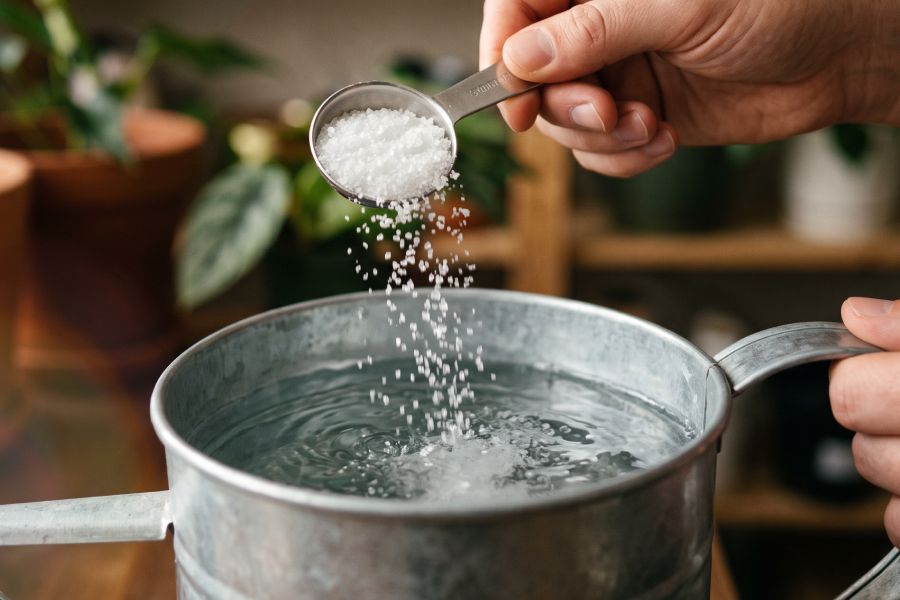
Epsom salt (magnesium sulfate) dissolves into a fast-acting magnesium feed, though the method depends on your setup. In a hydro reservoir, mix one teaspoon per gallon of water. In soil or planting mixes, work one teaspoon directly into each quart of the medium as a once-off correction. For the fastest results, a foliar spray at the same one-teaspoon-per-gallon rate works too.
Regardless of which method you start with, taper to a quarter teaspoon of Epsom salt per gallon of water, delivered at each regular watering or reservoir change so magnesium doesn’t build up. Epsom salt also supplies sulfur, so a plant short on both nutrients often recovers from a single Epsom feed.
When Should You Flush Cannabis to Fix Magnesium Lockout?
You should flush cannabis to fix a magnesium deficiency only when salt buildup at the roots is blocking uptake (not as a default first move against a deficiency). In that case, run clean, pH-balanced water through the medium until about 30% drains out.
This washes the excess salts clear and resets the root zone. Keep the flush to plain pH’d water and don’t fold a nutrient dose into it. Once the salts are gone, correct the pH, and if a real shortage remains, feed magnesium then.
How Long Does It Take Cannabis to Recover From Magnesium Deficiency?
When you correct a magnesium deficiency, new growth typically stops showing symptoms within three to five days. Some damaged leaves recover partially, but the priority is stopping the spread to healthy foliage rather than saving every marked leaf.
Leave the discolored leaves in place until you are certain the problem has cleared, so any lingering damage stays on tissue that was already affected.
What Is the Difference Between Magnesium vs Cal-Mag Deficiency in Cannabis?
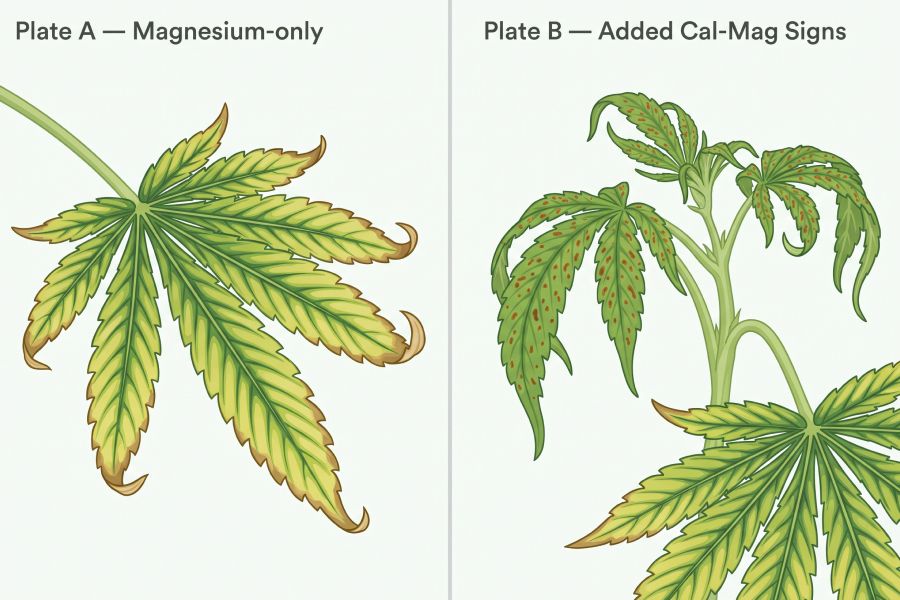
CMagnesium deficiency alone shows up as interveinal yellowing confined to the old, lower leaves, while a cal-mag deficiency adds calcium’s large necrotic blotches and twisted, crinkled growth on the newest leaves at the same time. Calcium deficiency and magnesium deficiency typically co-occur because they share the same causes: poor water quality (distilled or reverse-osmosis water) and media, like coco, that carry little natural reserve of either nutrient.

What Is Cal-Mag and When Do Cannabis Plants Need It?
Cal-Mag is a combined calcium-magnesium supplement that corrects both deficiencies at once, and many formulas add iron as well. Cannabis plants need Cal-Mag most in coco coir and in any setup running reverse-osmosis, distilled, filtered, or soft water, since those environments carry little Ca or Mg already available for the plant to draw on.
Cal-Mag vs Epsom Salt for Cannabis — Which Do You Need?
Cannabis plants need Epsom salt when the diagnosis points to magnesium deficiency alone (yellowing between the veins confined to the lower leaves). Reach for Cal-Mag if you’re also seeing calcium shortage symptoms like irregular, brown blotches on new growth or use it as a baseline supplement whenever you’re growing in coco or feeding RO water.
Which one you need comes down to whether one nutrient is short, or both.
What Are the Signs of a Cal-Mag Deficiency in Cannabis?
A cal-mag deficiency in cannabis combines magnesium’s interveinal yellowing on old leaves with calcium’s brown spotting and twisted damage on new growth.
That split is the tell: damage on both the oldest and the newest leaves at once, rather than confined to one end of the plant. Seeing both patterns together signals that calcium and magnesium are short at the same time rather than a single-nutrient problem. A combined Cal-Mag feed addresses both sides in one correction.
Can Cannabis Get Too Much Magnesium?
Yes, cannabis can take up too much magnesium when growers over-correct a suspected deficiency. Healthy plants hold magnesium within a working range, and pushing well past that range antagonizes other nutrients, which can lock out calcium and potassium in turn.
Signs of over-correction show up in the old, lower leaves first, the same place deficiency starts, along with stalled growth shortly after heavy dosing. If that happens, flush with clean pH-balanced water and hold magnesium until the plant recovers.
Magnesium toxicity is far less common than deficiency, and it almost always follows a heavy hand rather than a normal feed. Dosing conservatively and correcting pH first keeps magnesium in the healthy range where the plant thrives.
How Do You Prevent Magnesium Deficiency in Cannabis?
You prevent magnesium deficiency in cannabis by holding stable root-zone pH and feeding a balanced nutrient line from the start. A steady pH inside the absorption window keeps magnesium available, while a complete nutrient program supplies enough to meet demand.
Growers on coco or RO water head off trouble by including a Cal-Mag supplement in every feed, since those media strip out background minerals.
The same prevention habits that keep magnesium in range also head off other feeding problems, since most trace back to pH and salt balance at the roots.
Cannabis Magnesium Deficiency Symptom Checklist
A magnesium-deficient cannabis plant shows a recognizable cluster of leaf and stem symptoms that build from the bottom up. Use the checklist below to match what you see on the plant against the classic signs before deciding on a correction.
| Category | Symptoms |
| Leaf color | Yellowing between the veins; veins stay green; pale lower leaves; rust-brown spots in the yellowing tissue |
| Leaf symptoms | Lower and older leaves damaged first; edges dry and crispy; leaf tips die back; leaves curl inward (“taco leaves”); older leaves drop off |
| Stem and plant | Red or purple petioles and stems; stalled new growth; lower foliage loss; general withering if untreated |
If the newest top leaves show big brown spots or twisted growth alongside this pattern, calcium is likely short too, which points to a combined cal-mag correction rather than magnesium alone. Related patterns overlap with an iron deficiency, which also traces back to pH lockout but strikes the newest leaves first instead of the oldest.
From Fixing Deficiencies to Growing Resilient Plants
Resilient plants start with stable genetics, and quality weed seeds give growers a healthier baseline before deficiencies ever appear. Strong, uniform genetics handle nutrient swings better than weak stock, which shortens the window where problems like magnesium lockout take hold.
Pairing good seeds with steady pH and a balanced feed is the most reliable way to keep a canopy green from seedling to harvest.
Growers who want a predictable, all-female crop often begin with feminized cannabis seeds, which removes male-plant guesswork from the grow. Those after a faster, lower-maintenance grow tend to reach for autoflowering seeds, which run from seed to harvest on their own schedule.
Eligible adult buyers should confirm that purchase and cultivation are permitted under federal, state and local law.
Thanks for reading. Please leave comments or questions below and don’t forget to download my free grow bible.
Frequently Asked Questions About Cannabis Magnesium Deficiency
Can Magnesium Deficiency Happen During Flowering?
Yes, magnesium deficiency can happen during flowering, and demand often rises as buds develop. Flowering plants pull heavily on magnesium to keep the upper canopy photosynthesizing, so a shortage that started in veg can accelerate. Keep pH stable and maintain magnesium in the feed through bloom to hold the deficiency off.
How Much Epsom Salt Do You Use per Gallon for Cannabis?
In a hydro reservoir or as a foliar spray, use one teaspoon of Epsom salt per gallon of water, then taper to a quarter of that dose on each following feed. In soil or planting mixes, add one teaspoon directly into each quart of the medium as a one-time correction, then switch to the quarter-dose liquid feed for maintenance going forward. Dissolve it fully before feeding (undissolved crystals won’t reach the roots) and correct pH first so the magnesium you add can actually be absorbed.
Will Magnesium Deficiency Kill a Cannabis Plant?
Magnesium deficiency will not usually kill a cannabis plant if you catch and correct it early. Left untreated, it spreads upward, strips the lower canopy and weakens the plant enough to cut into yield. Once pH and feeding are corrected, new growth recovers and the spread stops.
Does Cal-Mag Fix Magnesium Deficiency on Its Own?
Cal-Mag fixes magnesium deficiency on its own when the shortage involves both calcium and magnesium, which is common in coco and RO-water grows. For a magnesium-only shortage, plain Epsom salt works and avoids adding calcium the plant may not need. Match the supplement to whether one nutrient is short or both.
Can Too Much Cal-Mag Hurt Cannabis Plants?
Yes, too much Cal-Mag can hurt cannabis plants by pushing calcium and magnesium past their working range and suppressing uptake of other nutrients, particularly potassium. Overdosing shows up in the older, lower leaves first (the same place a shortage would appear) with stalled growth and reduced yield. Dose to the product label and correct pH first rather than escalating the amount.
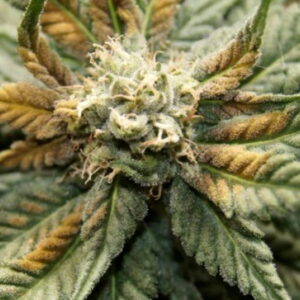
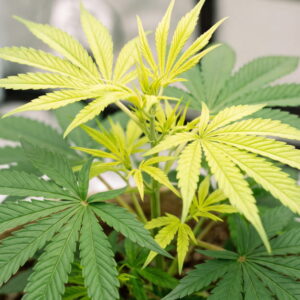

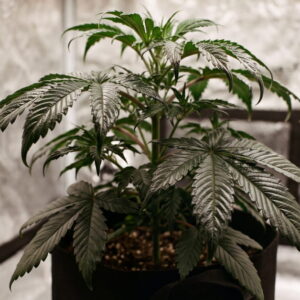
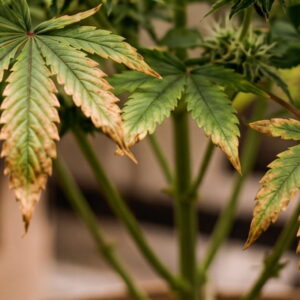
Help I think I have a cal mag deficiency. Really looks bad. Any advice to save my plants quick?
Mike,
my advice is to join ilgmforum.com, and post some pictures.
We cannot tell if you have a Mg deficiency without seeing the plant; Therefore, I cannot give you informed advice. Join the forum and we will give you honest and valuable opinions on what to do next.
When you get to ILGM; Look for a support ticket, which is pinned at the top of the beginners forum
SpaceCowboy207,
The way you tell if your methods atr working is to monitor the new growth. That shows you if the plant is growing healthy.
Damaged leaves can be removed when they are almost completely discolored, and maybe a little sooner. Prune lightly when you do in order to not stress the plant any further.
I suggest that you join our Support forum and fill out a “Support Ticket” in a new topic. Let me know if you have any issues. You may not be allowed to start a topic until you have made a few posts, and spent a total of 20 minutes on the forum. Pretty easy to accomplish if you just peruse around and make polite posts in appropriate topics. Later, lw
hey thanks for the great article!! this is he most detailed site for info i’ve found so far, full of excellent information. i am pretty sure i have a cal/mag deficiency, but it may have led to nut. lockout for all i know. it’s been roughly 10days since i flushed the plants until the pH levels where the same going into the soil as they were coming out. i then gave them a 1tsp/gal of cal/mag the next day and continued the regular feeding schedule. no improvement on 1/2 the plants ( all indica stains). how long till i can tell when the issue has been resolved? should i remove the discolored leafs sooner or later? repeat the process i mentioned again if not resolved? thanks ahead for any info.
[…] nutrients that cannabis plants need the most. This list includes phosphorus, nitrogen, potassium, magnesium, calcium, and sulfur. Micronutrients refer to the remaining nutrients that are necessary for a […]
[…] The easiest and most common way to fix a magnesium deficiency is the application of Epsom salts. Be careful, though, you want to make sure you’ve diagnosed the deficiency correctly before trying to fix it. If you apply too many unneeded nutrients, you could be causing a whole new problem instead of fixing the real issue. Read more about magnesium deficiencies in marijuana plants […]
[…] Magnesium deficiency […]
We are a worm casting business and have been wanting to test a mixture of castings with magnesium sulphate or dolomite for distribution as an additive in the same mixture/bag. Any advice?
I’m a first-time grower and my plants have a calcium magnesium deficiency.. I started feeding the plants Cal mag a couple days ago my question is how long will it take for them to fully recover from this?? Will the damaged leaves repair themselves or should I just remove any unhealthy looking leaves?? Thanks