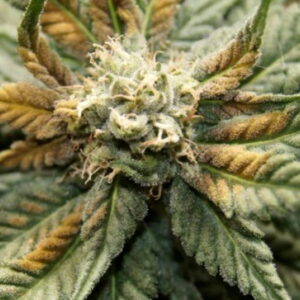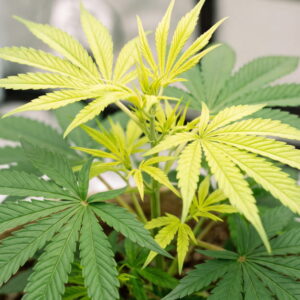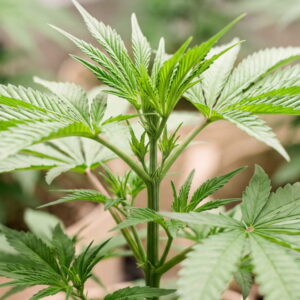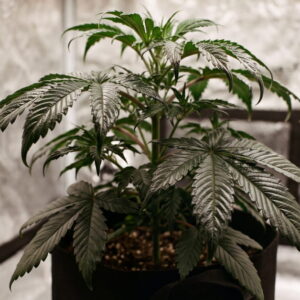
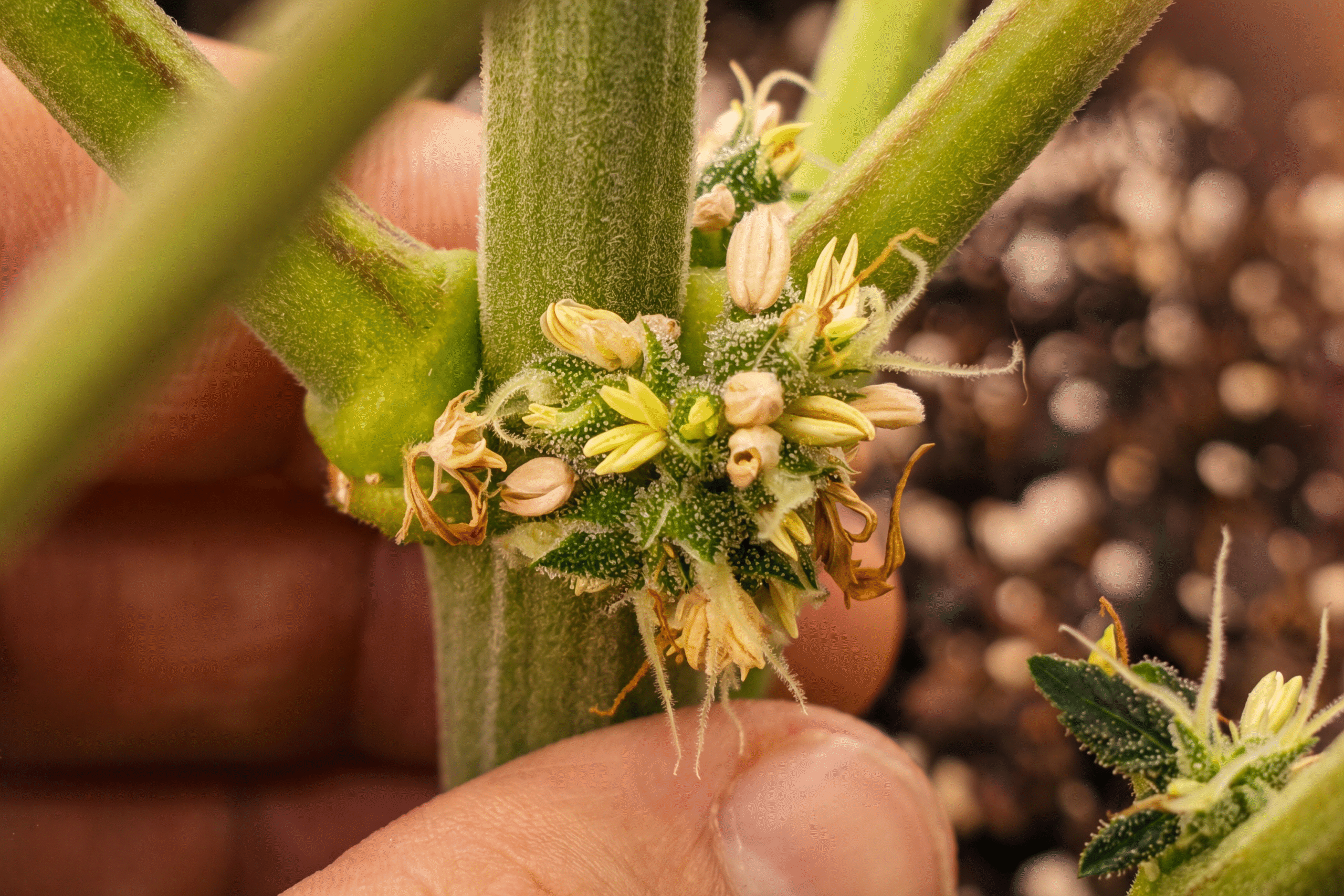
A hermie plant shows its earliest sign when small male pollen sacs or yellow banana-shaped anthers appear among the white female pistils. These male parts are the only confirmed early signals that a cannabis plant has turned hermaphrodite. Catching them before the sacs open and release pollen is what saves a crop from going to seed.
Most hermies trace back to stress during flowering, so spotting the signs early and removing the source protects the buds you planned to harvest.
Quick check: Look for smooth, round balls (pollen sacs) at the nodes or yellow banana-shaped anthers (“nanners”) pushing out of the buds. Those two male structures are the only confirmed early signs of herming — a swollen calyx or a single stray hair means look closer, not act. Once you confirm a hermie, isolate or remove it before the sacs split and spread pollen to nearby female flowers.
| Trait observed | Normal female plant | Hermie plant | Trust Level |
| Round pollen sacs at the nodes | Absent | Present, clustered like tiny grapes | High |
| Yellow banana anthers or nanners | Absent | Present, emerging from buds | High |
| White hair-like pistils | Present (normal) | Present, alongside male parts | N/A — normal |
| Swollen calyx | Common as buds mature | May be present | Low alone |
| Single stray structure | Rare | Possible | Low |
The two high-reliability rows confirm a hermie on their own. The low-reliability rows mean look closer, not panic.
What Is a Hermie Plant (Hermaphrodite Cannabis)?
A hermaphrodite cannabis plant develops both male pollen sacs and female pistils on the same plant. A healthy female grows only pistils, the fine white hairs that catch pollen and signal flower development.
A hermie breaks that pattern by producing male reproductive structures too, which means it can shed viable pollen onto its own buds and any females around it. This dual expression usually appears under stress rather than by design.
The trouble starts because those male parts carry viable pollen. Once a hermie releases pollen, nearby female flowers stop putting energy into resin and start making seeds. That single shift is why growers track hermaphrodite traits so closely during flowering.
What Does “Hermie,” “Herm” and “Herming” Mean?
“Hermie” is grower slang for a hermaphrodite cannabis plant, and the terms “herm,” “hermed,” and “herming” all describe the same condition. A plant that is “herming” is actively producing both male and female structures. A “hermed” plant has already done so.
The slang is interchangeable, so a “herm weed plant” and a “hermaphrodite cannabis plant” name the identical problem.
Growers also shorten the male structures themselves into slang. “Nanners” means the banana-shaped anthers, and “pollen sacs” or “balls” means the round male flowers. Knowing both the slang and the formal terms helps when you compare grow forums against breeder descriptions.
Why Do Hermaphrodite Cannabis Plants Matter to Your Harvest?
A hermaphrodite plant pollinates itself and nearby females, which produces seeded buds instead of smokable flower. Seeded flower weighs more but smokes harsh, loses potency, and wastes the resin you grew the plant for. One overlooked hermie in a tent can seed an entire crop within days.
The damage compounds because pollen travels. A hermie at the back of a grow space can reach every female plant through air movement alone. That reach is why early identification matters more than any single rescue technique later.
What Are the Early Signs of a Hermie Plant?
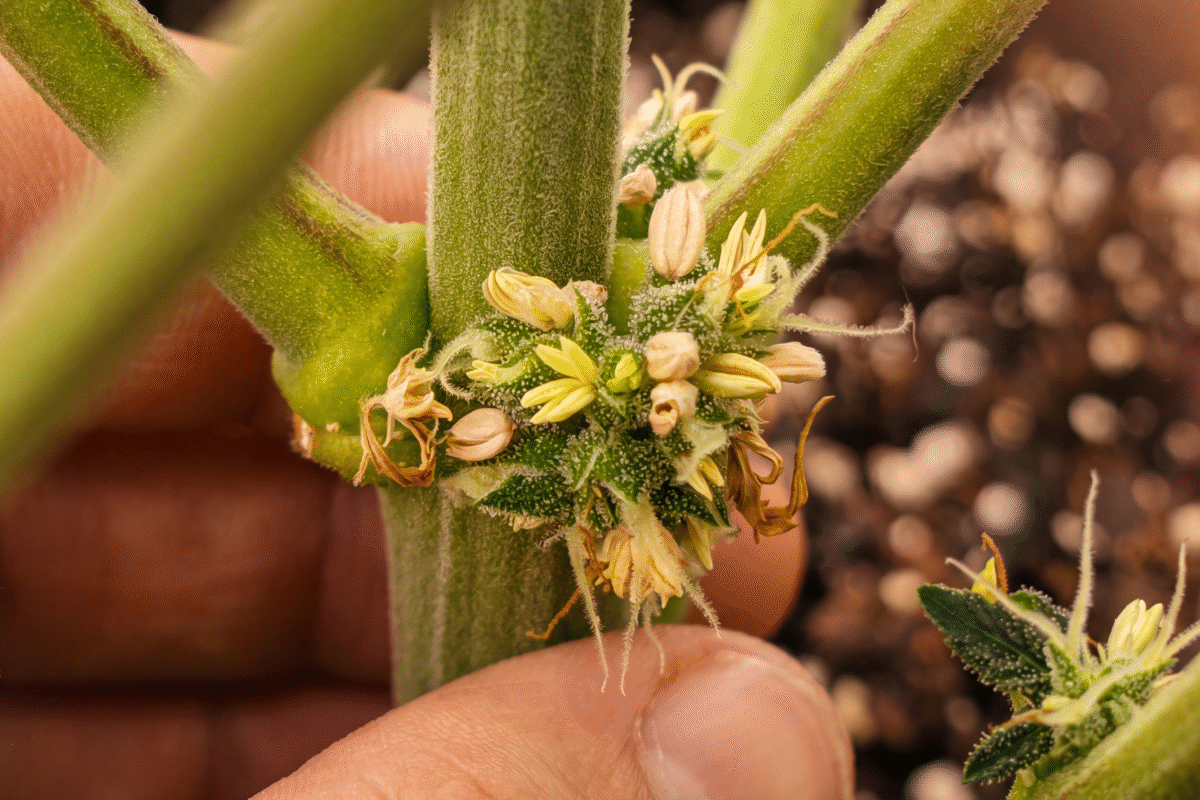
The earliest sign of a hermie plant is the appearance of small male pollen sacs or banana-shaped anthers (“nanners”) among the female flowers. Pollen sacs look like smooth, round balls clustered at the nodes where branches meet the stem. Nanners look like curved yellow bananas pushing straight out of the buds.
Both carry pollen, and both confirm herming on sight. Below are the signals that matter, ordered from most to least reliable:
- Pollen sacs at the nodes — round, hairless balls that confirm a hermie on their own.
- Nanners on the buds — yellow banana anthers emerging from flowers, the clearest mid-flower signal.
- Pollen sacs vs pistils — telling male balls apart from normal white female hairs.
- Swollen calyx or hermie — the low-reliability look-alike that fools most growers.

Pollen Sacs vs Pistils — How to Tell Them Apart
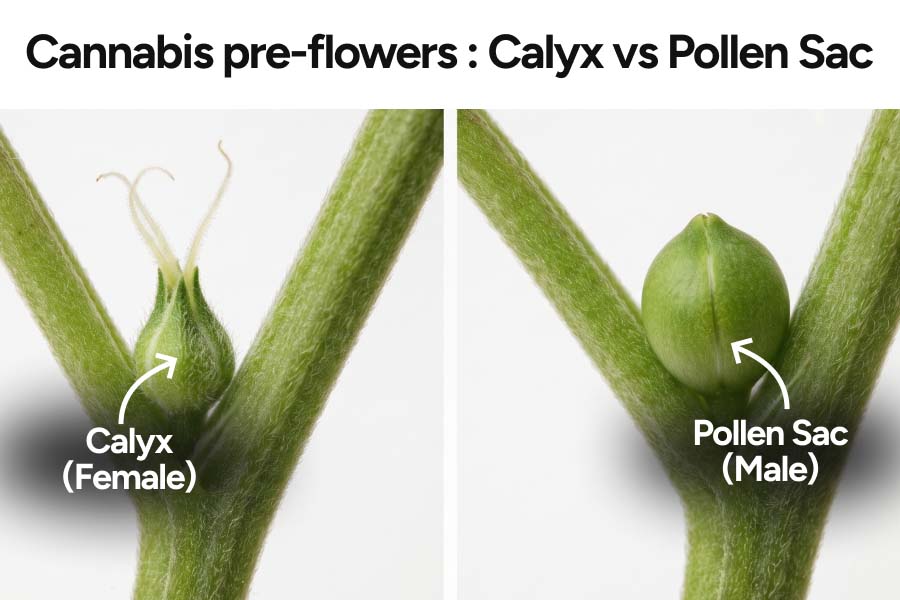
Pollen sacs grow as smooth, round balls at the node, while pistils emerge as fine white hairs from a teardrop-shaped calyx. The calyx is the small pod at the base of each flower, and a true female pushes two white hairs from it.
A pollen sac has no hairs at all, it stays closed and rounded until it splits open. That hairless, rounded shape is the fastest way to separate male from female.
Timing helps too. Female pistils show up early and stay white before darkening near harvest. Pollen sacs appear at the nodes and hang in grape-like clusters rather than catching the light like hairs. When you see balls without hairs, you are looking at male structures.
Banana-Shaped Anthers (“Nanners”) on Cannabis Buds
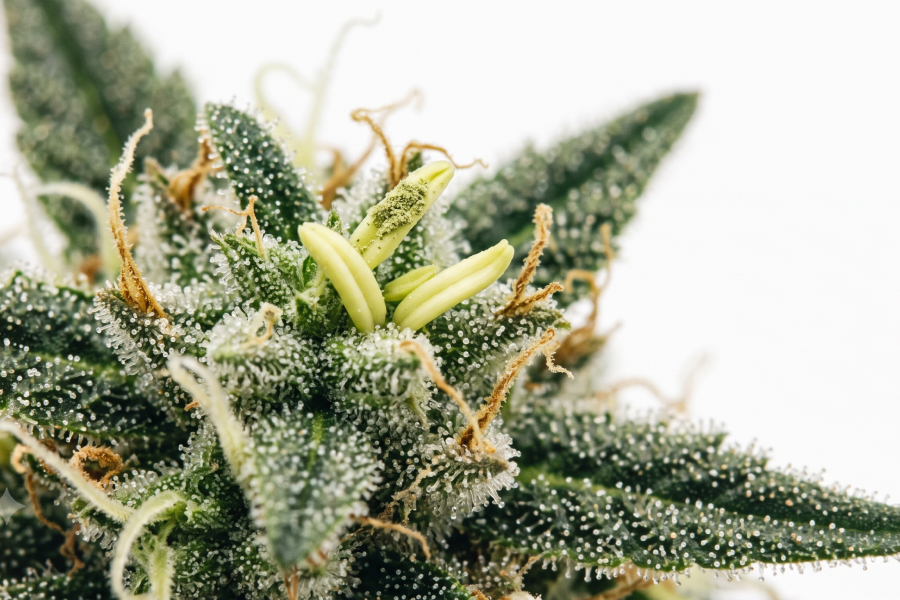
Banana-shaped anthers, called “nanners,” are exposed yellow male pollen structures that grow directly from female flowers. Unlike round pollen sacs that form at the nodes, nanners push straight out of the buds themselves. They appear bright yellow or pale green and curve like a small banana.
A nanner can release pollen quickly, sometimes within hours of appearing.
Nanners signal a more urgent problem than early pollen sacs because they often skip the sac stage entirely. The plant exposes pollen directly, so the window to act is short. Check buds daily once flowering reaches its midpoint, especially on plants that have taken any stress.
Swollen Calyx or Hermie? How to Read the Difference
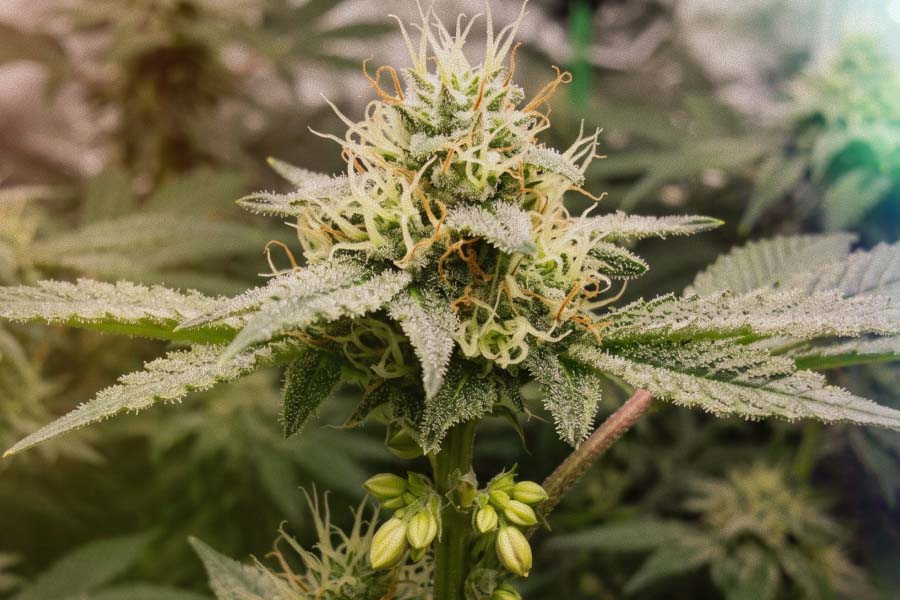
A swollen calyx signals a maturing or seeded female flower, while a true hermie shows distinct pollen sacs or nanners alongside the pistils. New growers often mistake fat, swollen calyxes for male balls and cull a healthy plant. A swollen calyx still has its white pistil hairs and sits as part of the bud structure. A pollen sac sits separately at the node and carries no hairs.
The reliable test is hairs and location. If the rounded shape still has pistils and belongs to the flower cluster, it is a calyx doing its job. If a smooth ball sits at the node with no hairs, that is a male structure and the plant is herming.
What Does a Hermie Plant Look Like at Each Stage?
A hermie plant looks different depending on whether it herms in late vegetative growth or during flowering.
In late veg, male structures show up as small sacs forming at the nodes before any buds exist. In flowering, the same plant hides male parts among developing buds, which makes them harder to spot. The stage you are in changes where you look and what you expect to see.
Knowing the stage also tells you how much time you have. Early herming gives you weeks to act. Late-flower herming gives you days, because mature buds and exposed pollen sit close together.
Early Signs of Hermie Plants in the Flowering Stage
During flowering, a hermie plant shows pollen sacs or nanners forming between the bracts of developing buds. The bracts are the small leaf-like structures that wrap each flower, and male parts tuck in behind them. This placement makes flowering-stage hermies easy to miss until pollen is already loose. Pull each bud gently into the light and check the spaces between bracts.
Flowering hermies often appear two to four weeks into the flower phase, right when buds start to fill. That timing overlaps with peak stress sensitivity, so a heat spike or light leak in early flower is a common trigger. Daily inspection through this window catches most cases early.
Female Plants That Turn Hermie Late in Flower
A female plant that turns hermie late in flower develops nanners after weeks of normal pistil growth, often in response to stress or over-ripeness. These late hermies have already built most of their resin, so a few nanners near harvest do less damage than early herming. The plant is reacting to an aging clock or a late stressor, not a genetic flaw.
Late nanners still spread pollen, so isolate the plant and watch neighbors. If harvest is only days away, many growers finish the plant rather than cull it, then check the dried buds for any seeds.
What Causes a Cannabis Plant to Turn Hermaphrodite?
A cannabis plant turns hermaphrodite when stress disrupts its hormonal balance during flowering. The plant reads stress as a survival threat and produces male parts to pollinate itself and pass on its genetics before it dies.
Stress is the trigger behind most early signs of hermie plant development, so some causes come from the environment and some come built into the seed. Knowing the cause is what makes prevention possible.
The main causes break down into three groups:
- Light leaks — interrupted dark cycles that confuse flowering hormones.
- Environmental stress — heat, physical damage, and nutrient swings that push the plant past its tolerance.
- Unstable genetics — an inherited tendency to herm that surfaces even in clean conditions.
Light Leaks and Interrupted Dark Cycles
Light leaks during the dark period interrupt the plant’s flowering hormones and trigger hermaphrodite traits. Flowering plants need uninterrupted darkness to hold their hormonal rhythm, and even a brief light intrusion can break it.
Common sources include indicator LEDs on equipment, tent zipper gaps, and light entering from a hallway. Sealing the grow space during dark hours removes one of the most frequent triggers.
The fix is consistency. A flowering plant that gets the same dark hours every night holds its rhythm and stays female. Stable conditions protect the genetics you started with.
Environmental Stress — Heat, Damage and Nutrients
Heat spikes, physical damage, and nutrient swings stress cannabis plants enough to push them toward hermaphroditism. High temperatures during flowering are a leading trigger, along with broken branches, heavy-handed training, and sudden feeding changes. Each one signals danger to the plant, and a stressed plant hedges its bets by making male parts.
A balanced feeding routine and stable temperatures keep that response from firing.
Nutrient stress cuts both ways. Both overfeeding and underfeeding rank among the swings that stress a plant during flowering, so catching the early signs of nutrient deficiency on the leaves helps you correct course before the plant reacts. Steady inputs matter more than rich ones.
Unstable Genetics and Inherited Herming
Unstable genetics carry an inherited tendency to herm, which surfaces even when growing conditions stay stable. Some seed lines were never fully stabilized, so they throw hermies regardless of how clean the grow is.
This is why two growers can run the same conditions and only one sees herming — the genetics differ. Starting with stable, well-bred seeds removes this cause before the grow begins.
Genetics set the floor for everything that follows. A plant with a strong female background resists stress that would tip a weaker line into herming. Seed choice is the earliest decision that shapes the outcome.
How Do You Prevent Hermie Cannabis Plants?
You prevent hermie cannabis plants by removing stress sources and starting with stable, feminized genetics.
Stress prevention covers the grow: seal light leaks, hold steady temperatures, feed on a consistent schedule, and avoid rough handling during flowering. Genetic prevention covers the start: choose seeds bred for female stability so the plant resists stress in the first place. The two layers work together.
Feminized seeds cut the herming risk that comes from unstable backgrounds, since reputable lines are bred and tested for consistent female expression. No seed removes the risk entirely, because severe stress can tip almost any plant, but stable genetics raise the threshold. Follow your federal, state, and local cultivation rules, and start seeds only where it is lawful to do so.
A calm, consistent grow space is the single best defense, since growing weed in stable conditions keeps the stressors that trigger herming in check. Most hermies that growers blame on genetics trace back to a fixable stressor like a light leak or a heat spike. Control the environment first, and stable seeds handle the rest.
What Should You Do If You Find a Hermie Plant?
You should isolate or remove a hermie plant immediately to stop its pollen from seeding nearby female flowers. The first move is containment: pull the plant away from your females before any sacs open.
From there, the decision depends on how far flowering has progressed and how many male parts you find. A few late nanners call for different action than a plant covered in pollen sacs.
For an early or heavily herming plant, removal protects the rest of the crop and is usually the safest call. For a plant with only a few nanners close to harvest, careful removal of the male parts and isolation can let it finish, though watching for more is essential. Either way, check every neighboring plant for pollen and inspect daily until you are sure the threat has passed.
If buds already carry seeds, the harvest is not wasted. Seeded flower still dries and cures, and the plant has taught you where the stress came from. The next grow starts cleaner because of what this one revealed.
Hermie Plants, Seed Sex and Choosing Stable Cannabis Seeds
Hermie plants trace back to seed sex and genetic stability, which makes seed choice the first line of defense. Every plant carries a sex outcome from its seed, and understanding how male vs female cannabis plants develop explains why hermies happen and how to read the early signs. That skill starts with knowing how plant sex expresses itself in the first weeks of growth.
Seed sex also shapes the buying decision. Feminized seeds are bred to grow into female plants, which removes the male-plant guesswork and lowers the inherited herming risk that unstable lines carry. Growers who want female plants and a controlled schedule can buy feminized seeds from a tested line as the most reliable start.
For growers planning a faster, age-based lifecycle, autoflower cannabis seeds reach flowering on their own timeline and suit short-season or compact grows, so growers who want that route can buy autoflower seeds bred for stability.
Whichever direction fits the grow, a well-bred starting seed shapes how the plant handles stress through every stage that follows, and growers comparing options can buy cannabis seeds across feminized, autoflower, and regular types. Buy seeds only as an eligible adult and where local law permits cultivation.
Frequently Asked Questions
When Should You Harvest a Hermie Plant?
Harvest a hermie plant based on its trichomes and how far flowering has progressed, not on the herming alone. A plant that herms close to harvest can often finish on schedule, since most resin has already formed. A plant that herms early has more time exposed to pollen, so many growers remove it rather than push it to harvest. Check the buds for seeds before and after drying.
Can Autoflowers Turn Hermie?
Yes. Autoflower plants can turn hermie under the same stressors that affect photoperiod plants, including heat, damage, and nutrient swings. Autoflowers do not rely on a light-cycle flip, so light leaks matter less, but environmental stress still triggers herming. Stable autoflower genetics and a calm grow space lower the risk.
Will a Hermie Plant Ruin the Whole Crop?
A hermie plant can seed an entire crop if its pollen reaches nearby females, because pollen travels through air movement alone. Catching the hermie before its sacs open is what prevents crop-wide seeding. Isolating or removing the plant early usually limits the damage to that one plant.
Are Hermie Seeds Worth Keeping?
Hermie seeds carry the herming tendency of the plant that produced them, so they tend to throw hermies again. Seeds from a stress-induced hermie are less predictable than seeds from a stable, intentional breeding program. Growers who want reliable results start with stabilized seeds rather than seeds collected from a hermie.
Can a Female Plant Turn Into a Hermie?
Yes. A female plant can turn hermie when stress disrupts its hormones during flowering, which is the most common path to herming. The plant produces male parts as a survival response, not because it was secretly male. Removing the stress source and starting with stable genetics prevents most of these cases.
What’s the Difference Between a Hermie and a Male Plant?
A hermie produces both male and female structures on one plant, while a male plant produces only pollen sacs and no pistils. A male shows clusters of round sacs at the nodes with no white hairs anywhere. A hermie shows those sacs or nanners alongside female pistils. The presence of pistils is what separates a hermie from a true male.