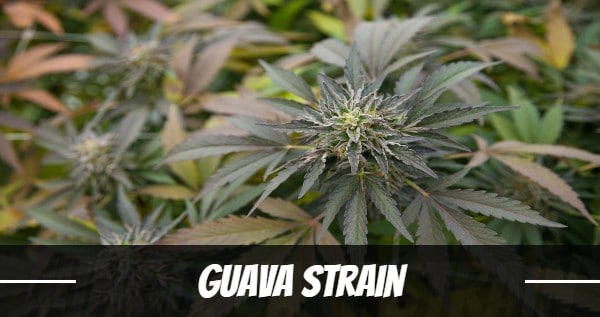
Guava is a sativa-leaning cannabis strain known for a talkative, focused and energetic feel, a fruity apricot-and-tropical flavor, and its roots as a Gelato phenotype. It’s earned a reputation for upbeat daytime effects, solid potency around 21% THC, and a sprawling family of Guava-named relatives.
What Is the Guava Weed Strain?
Guava is a sativa-leaning cannabis strain valued for its fruity flavor, upbeat daytime effects and Gelato-phenotype background. It’s a well-known wake-and-bake favorite, the kind of strain people reach for when they want to feel talkative and clear-headed rather than sedated.
The flavor leans sweet and tropical, with apricot and tree-fruit notes that give the strain its name. Potency sits around 21% THC, which places Guava in the solidly strong range that experienced consumers enjoy and newcomers should approach with a little caution.
Guava is commonly grown as a feminized photoperiod plant, and growers exploring their options can browse quality cannabis seeds at ILGM to match a seed type to their setup, climate and experience level.
Guava Weed Strain Quick Facts
Use this quick facts table to compare Guava by type, genetics, THC, effects, flavor, terpenes and grow difficulty at a glance.
| Property | Value |
| Strain name | Guava |
| Type | Sativa / sativa-leaning |
| Genetics | Commonly reported as a Gelato phenotype (Cookies Fam) |
| THC range | ~21% |
| CBD range | Low / trace |
| Other cannabinoids | CBG ~1% |
| Main effects | Talkative, focused, energetic |
| Flavor | Apricot, tree fruit, tropical |
| Aroma | Sweet fruit with a light gassy edge |
| Dominant terpenes | Limonene, caryophyllene, linalool |
| Flowering time | 8–10 weeks indoors |
| Grow difficulty | Beginner-friendly, low-maintenance |
| Best environment | Indoor, outdoor or greenhouse |
| Seed availability | Commonly grown from feminized seeds |
Is Guava Indica or Sativa?
Guava is usually classified as a sativa-leaning strain. Its reported effects match that label: users tend to describe an upbeat, mentally active experience rather than a heavy, couch-locking one, which is why so many people treat it as a daytime strain.
Classification does shift depending on who you ask. Cookies Fam lists a heavily sativa-dominant version, Sherbinski describes a more balanced 50/50 hybrid, and some breeders lean the other way toward indica dominance. Because of that spread, “sativa-leaning” works as a general guide rather than an exact prediction of how any single plant will feel.
The takeaway for most buyers is simple: Guava behaves like an energizing, sociable strain across the board, even when the paperwork on ratios disagrees.
Guava Weed Strain Genetics and Lineage
Guava is most commonly reported as a Gelato phenotype originally associated with the Cookies Fam breeding collective, with additional lineage claims that vary by source. That Gelato background is widely cited as the origin of its dessert-fruit flavor and its polished, modern-hybrid character.
The lineage is genuinely debated, and it’s worth knowing the main threads:
- Cookies Fam and Sherbinski agree on the Gelato-phenotype profile but use different names for it — Cookies Fam calls it “Guava,” while Sherbinski calls the same strain “Guava Gelato.”
- Flavour Chasers and Garden of Green report a different cross entirely, describing Guava as the offspring of Stardawg and Afghani.
- Classification splits too, with breeders variously calling it sativa-dominant, a balanced hybrid, or indica-leaning.
None of these claims is settled, so the honest picture is a strain with a strong Gelato association and a few competing origin stories layered on top. What matters for growers is that Guava’s genetics translate into a fruity, resinous, manageable plant regardless of which lineage story you favor.
Guava genetics influence plant structure, flowering time and aroma direction, and how the plant behaves from seed to harvest varies by phenotype, environment and grower experience.
Guava Weed Strain THC and Cannabinoid Profile
Guava is commonly listed at around 21% THC, with roughly 1% CBG and low CBD. That puts it in solidly potent, high-THC territory: strong enough to satisfy seasoned users, but not an extreme outlier at the top of the scale.
Exact potency always depends on phenotype, grow conditions, harvest timing, curing and the testing source, so treat the numbers below as a reliable ballpark rather than a fixed guarantee.
Beginners or low-tolerance consumers should approach higher-testing batches carefully, since reported strength can vary between growers and samples.
| Active Compound | Range | Notes |
| THC | ~21% | Commonly listed; varies by phenotype and testing |
| CBD | Low / trace | Not a significant contributor |
| CBG | ~1% | Minor cannabinoid, commonly reported |
What Are the Effects of the Guava Weed Strain?
Guava is commonly reported to feel talkative, focused and energetic, with an experience usually described as upbeat and daytime-friendly. It’s the kind of strain people associate with conversation, creative momentum and a generally sociable mood rather than deep relaxation.
The onset tends to arrive fairly quickly and lands in the head first. Many users describe a clear-headed lift that makes them chatty and mentally engaged. That focus is part of why Guava has a reputation as a productive strain: the energy is present without tipping into an overwhelming, jittery high for most experienced consumers.
Because the profile is stimulating, day use suits it better than evening use. Plenty of people reach for it as a wake-and-bake option or a companion for busy, social afternoons.
Beginners and low-tolerance users, though, should start small – the combination of ~21% THC and an energizing character can feel like a lot at once for a first-timer.
| Effect | Intensity | Best Time | Notes |
| Talkative | Medium–strong | Day | Sociable, upbeat, friendly lift |
| Focus | Medium | Day | Clear-headed, supports creative or focused activity |
| Energy | Medium–strong | Day | Upbeat body-and-mind energy, not sedating |

Guava Weed Strain Side Effects and Beginner Caution
Guava may cause dry mouth, dry eyes and anxiety in some users, especially those new to high-THC cannabis. The energizing profile that makes it enjoyable can also tip into overstimulation if the dose is too high, so pacing matters.
Like many potent strains, Guava can produce common, generally mild reactions:
- Dry mouth and dry eyes — the most frequently reported effects, easily managed with hydration.
- Anxiety or a racing feeling — more likely for beginners or anyone sensitive to stimulating strains.
- A quicker heartbeat or a cough on the inhale — some users note these, particularly with larger amounts.
The practical rule is to start low, stay hydrated, and treat Guava as a daytime strain until you know how your tolerance handles it.
Guava Weed Strain Flavor and Aroma
Guava flavor is usually described as fruity apricot and tropical with tree-fruit notes, while the aroma carries sweet fruit and a light gassy edge. The taste is where the strain earns its name: a mouthful of sweet, sun-ripe fruit that lingers pleasantly on the exhale.
On the palate, the dominant impression is tropical and apricot-forward, backed by softer tree-fruit sweetness. It reads more like a fruit-basket dessert than a sharp citrus or a heavy earth profile, which makes it approachable and easy to enjoy.
The aroma follows the flavor but adds a twist. Ground up, the flower releases a sweet, fruity aroma with a subtle gassy, fuel-like undertone underneath, the quality that shows up in Guava crosses like Guava Gas and Sour Guava. That interplay between sweet fruit up front and a light diesel edge behind it is a big part of what makes the strain memorable.
Guava Weed Strain Terpenes
Guava’s terpene profile is most associated with limonene, supported by caryophyllene and linalool. Together, these three shape both the sweet-fruit flavor and the gassy-spicy edges that define the strain’s aroma.
| Terpene | Aroma / Flavor | Prevalence |
| Limonene | Citrus, sweet, fresh | Dominant |
| Caryophyl. | Peppery, spicy | Supporting |
| Linalool | Floral, soft | Supporting |
Limonene leads the profile and drives the bright, fruity-sweet character. Caryophyllene adds the peppery, slightly gassy contrast that keeps the sweetness from feeling flat, while linalool contributes a soft floral note in the background.
These terpenes explain the aroma and flavor, they are not a basis for any health or therapeutic claim.
What Does the Guava Weed Strain Look Like?
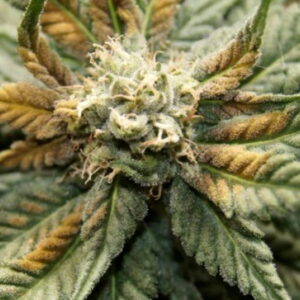
Guava buds are usually described as medium-sized and spade-shaped, with moss-green color, amber pistils and a frosty trichome layer. The nugs take the pointed, spade-like form of a playing-card suit rather than a rounded ball.
The green is a muted, mossy tone rather than a bright lime, and it’s threaded with amber-orange pistils that stand out against the leaf. A generous coat of trichomes gives the flowers a frosted, icy finish that signals the strain’s resin production and contributes to its sticky, aromatic feel.
Growing the Guava Weed Strain
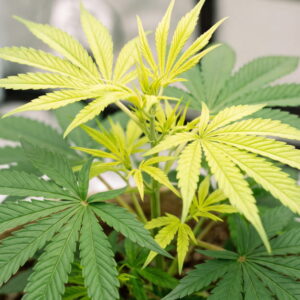
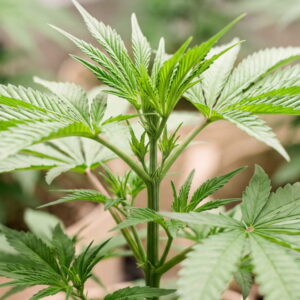
Guava grows as a low-maintenance, beginner-friendly cultivar suited to indoor, outdoor and greenhouse setups, reaching about 50–60 inches (127–152 cm) with an 8–10 week flowering window. Despite its tangled genetic backstory, the plant itself is forgiving and doesn’t demand advanced techniques to produce a satisfying harvest.
The flowering times, height and yield below reflect Guava grown from feminized photoperiod seeds. Autoflowering versions sold under the Guava name run on a shorter, calendar-independent timeline, so their grow expectations differ.
It stays a manageable size, produces resinous spade-shaped nugs, and performs well across a range of environments, a good fit for newer growers who want a flavorful result without a steep learning curve.
Most growers start Guava from feminized seeds, which produce virtually all-female plants, where lawful. The seed format you pick — feminized, autoflower or regular – changes how Guava grows and what you harvest, so it’s worth matching the choice to your space, experience and goals.
Growing Guava Indoors
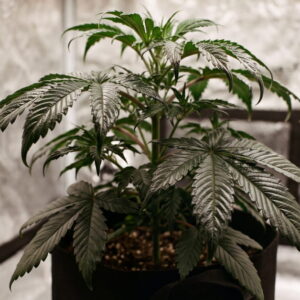
Guava grows indoors reaching 50–60 inches (127–152 cm), flowering in 8 to 10 weeks with yields up to around 2 oz/ft² (about 600 g/m²). Its moderate height keeps it tent-friendly, and its low-maintenance nature makes it a comfortable indoor project.
Under controlled light and airflow, the plant produces dense, trichome-heavy flowers on a predictable schedule. Its forgiving character means small mistakes are less likely to ruin a run, which is part of why it suits first-time indoor growers.
Growing Guava Outdoors
Guava grows outdoors in warm, temperate climates, with harvest usually in late October and yields of 5 to 18 oz per plant (about 150 to 500 g per plant). It also does well in a greenhouse, which can extend the season and shelter the plant in cooler regions.
Growers on a shorter season who want a faster, calendar-independent harvest can look at autoflower seeds instead.
Guava Strain Names and Related Varieties
Guava strain names cover a family of phenotypes and crosses, with Pink Guava, Strawberry Guava and Guava Gelato sharing the fruity profile while differing in lineage and effect balance. It’s easy to assume all of these are one strain, but they’re better understood as a related group orbiting the same sweet-fruit identity.
A few of the most-searched relatives:
- Guava Gelato — the closest to Guava proper, reflecting the shared Gelato-phenotype background.
- Pink Guava, Strawberry Guava, White Guava — flavor-forward variants that emphasize different fruit notes.
- Rainbow Guava, Guava Runtz, Guava Gas — crosses that blend Guava’s fruit with other lineages for different effect and aroma directions.
If you’re shopping by name, treat the “Guava” label as a flavor family first and check the specific lineage of any variant, since effects and potency shift from one cross to the next.
Guava Weed Strain Seeds
If you want to grow Guava yourself, it starts with the seeds. Most home growers go with feminized seeds, since they produce an all-female, flavor-focused crop without the guesswork of sexing plants.
Which format you choose – feminized, autoflower or regular – shapes how the plant grows and what you harvest, so it’s worth matching the seed to your space, climate and experience.
For eligible adult buyers, where lawful, ILGM is a solid starting point for beginner-friendly feminized seeds.
Guava vs Similar Strains
Compare Guava with similar strains if you want a different effect balance, flavor direction or potency level. The options below share either genetics, flavor, or effect character with Guava.
Gelato
Main difference: Guava’s parent line has more balanced effects.
Flavor: Sweet dessert, creamy
Potency: ~20–25%
Choose this if you want the richer Gelato foundation behind Guava.
Guava Gelato
Main difference: The closest relative with a very similar overall profile.
Flavor: Sweet fruit, dessert
Potency: ~20%
Choose this if you enjoyed Guava and want a near-match.
Zkittlez
Main difference: More indica-leaning with calmer effects.
Flavor: Candy, tropical fruit
Potency: ~18–23%
Choose this if you want fruity sweetness with a mellower feel.
Runtz
Main difference: A candy-forward, balanced hybrid.
Flavor: Sugary, fruity
Potency: ~19–24%
Choose this if you prefer a rounder, candy-like flavor.
Wedding Cake
Main difference: More potent with stronger relaxing effects.
Flavor: Sweet, vanilla, earthy
Potency: ~22–25%
Choose this if you want higher potency and a more calming experience.
Download my free marijuana grow guide and start growing Guava strain
FAQs About the Guava Weed Strain
Is Guava Indica Or Sativa?
Sativa-leaning is the usual call, and the talkative, energetic feel backs it up. Just know the label is not fixed: some breeders list it heavily sativa-dominant, others closer to a 50/50 hybrid, so treat it as a rough steer rather than a promise.
What Is Guava Gelato?
Guava Gelato reflects Guava’s most commonly reported genetics. Breeders Cookies Fam and Sherbinski describe Guava as a Gelato phenotype, and Sherbinski in particular labels its version “Guava Gelato.” The two names point to closely related, dessert-fruit-flavored plants.
Is Guava The Same As Guava Runtz?
No. Guava Runtz is a separate cross that blends Guava’s fruity profile with Runtz genetics. It shares the sweet-fruit family resemblance but has its own lineage, effect balance and flavor emphasis, so expect a different experience from Guava proper.
How Strong Is The Guava Strain?
Guava is commonly listed at around 21% THC, placing it in the solidly potent, high-THC range. That’s satisfying for experienced consumers but potentially intense for beginners, so low-tolerance users should start with a small amount until they know how it affects them.
What Are The Effects Of Guava?
Guava is commonly reported to feel talkative, focused and energetic, with an upbeat, daytime-friendly character. Many users describe a sociable, mentally active lift rather than a sedating body high, which is why it’s often used as a wake-and-bake or afternoon strain.
What Does Guava Taste Like?
Guava tastes fruity and tropical, led by apricot and tree-fruit sweetness. The flavor leans dessert-like rather than sharp or earthy, and the sweetness carries through to a pleasant, lingering exhale that lives up to the strain’s name.
What Does Guava Smell Like?
Guava smells sweet and fruity with a light gassy, fuel-like undertone. Grinding the buds brings out the tropical-fruit nose up front, backed by a subtle diesel edge that adds contrast and shows up more strongly in Guava crosses.
What Terpenes Are In Guava?
Guava’s terpene profile is most associated with limonene, supported by caryophyllene and linalool. Limonene drives the sweet-citrus fruitiness, caryophyllene adds a peppery, gassy contrast, and linalool contributes a soft floral note in the background.
How Long Does Guava Take To Flower?
Guava usually flowers in about 8 to 10 weeks indoors, with outdoor harvest arriving in late October. Exact timing shifts with your setup, phenotype and seed type, so treat those windows as a reliable guide rather than a fixed date.
Is Guava Easy To Grow?
Yes. Guava is considered a beginner-friendly, low-maintenance cultivar that performs well indoors, outdoors and in a greenhouse. Its manageable height and forgiving nature make it a good choice for newer growers who still want a flavorful, resinous harvest.
Can Guava Grow Outdoors?
Yes. Guava grows well outdoors in warm, temperate climates, with harvest usually in late October and yields of 5 to 18 oz per plant (about 150 to 500 g per plant). A greenhouse can extend the season and add protection in cooler regions, where lawful.
Are you a new grower looking for low-maintenance strains? Try our Beginner Mix pack and look forward to an easy growing season in a variety of settings.