Tropical Runtz is a sativa-dominant hybrid cannabis strain known for its sweet tropical-candy flavor, an energizing high that softens into calm, and an award-winning pedigree from Runtz and Tropic Truffle.
This ILGM strain guide covers its classification, lineage, roughly 24% THC potency, and the fruity terpene character that earned it a shelf of cannabis cup trophies.
What Is the Tropical Runtz Strain?
Tropical Runtz is a sativa-dominant hybrid built on a cross of Runtz and Tropic Truffle, bred by Exotic Genetix. The cultivar earned its reputation fast, taking multiple awards and landing on Leafly’s roundups of standout Runtz strains. Most consumers know it for two things: a candy-sweet tropical flavor and a high that starts bright and turns relaxing.
The strain leans toward an uplifting, social experience before its body effects settle in. That arc, paired with potency commonly listed around 24% THC, is why people seek it out for daytime sessions that still wind down gently.
Tropical Runtz seeds are most commonly produced in feminized format, with phenotype expression varying by breeder, grower experience and growing environment. Growers who track this cultivar tend to care as much about its tropical terpene profile as its yield, which is why the sections below cover both.
Tropical Runtz Strain Quick Facts
Use this quick facts table to compare Tropical Runtz by type, genetics, THC, effects, flavor, terpenes and growing difficulty.
| Property | Value |
| Strain name | Tropical Runtz |
| Type | Sativa-dominant hybrid |
| Genetics | Runtz × Tropic Truffle (Exotic Genetix) |
| THC range | Commonly listed up to ~24% |
| CBD range | Less than 1% |
| Main effects | Energizing, uplifted, talkative, happy, then calming |
| Flavor | Sweet tropical candy, sour citrus, mango, pineapple |
| Aroma | Sour tropical citrus, fruity banana, earthy spice |
| Dominant terpenes | Limonene, linalool, myrcene |
| Flowering time | Roughly 8–10 weeks indoors |
| Grow difficulty | Easy — inherits Runtz’s hardiness |
| Best environment | Warm, sunny climates |
| Seed availability | Most commonly produced as feminized |

Is the Tropical Runtz Strain Indica or Sativa?
Tropical Runtz is most often classified as a sativa-dominant hybrid, though the picture is genuinely mixed across sources. Its parents pass down both energizing and relaxing traits, so the strain can express either direction depending on the breeding line and growing conditions.
The sativa lean has real backing. Tropical Runtz has taken multiple High Times Cannabis Cup awards in the Sativa Flower category, including a first-place finish in Michigan and placements in Illinois and New Mexico. At the same time, some sources describe it as indica-leaning once the body effects arrive, which reflects how the high shifts over a session rather than a contradiction.
Classification can vary by breeder, phenotype and source, so “sativa-dominant hybrid” works as a general guide rather than an exact prediction of how a given batch will feel.
Tropical Runtz Genetics and Lineage
Tropical Runtz descends from Runtz and Tropic Truffle, bred by Exotic Genetix, with phenotype variation depending on source and growing line. The cross was an aspirational project from the breeder behind several award-winning cultivars, and the result quickly proved its pedigree on the competition circuit.
Runtz, a Zkittlez and Gelato #33 cross that reached legendary status around 2017, brings high-THC genetics, a candy terpene profile and an easy-to-grow nature. Its powerful genetics made it a go-to parent for breeders, producing a wide showcase of spin-off strains. Tropical Runtz inherited that potency and hardiness directly from the Runtz side.
Tropic Truffle, a slightly sativa-dominant cross of Tropicana Cookies and Mint Chocolate Chip, contributes the other half, bringing a stimulating, energizing character and a gassy-citrus terpene profile with sweet and sour notes. Blending Runtz’s THC-heavy backbone with Tropic Truffle’s vivid terpenes gives Tropical Runtz an offspring that is as flavorful as it is strong.
Tropical Runtz genetics shape what growers see in plant structure, flowering time, resilience and aroma direction; cultivation outcomes and grow-from-seed expectations vary by phenotype, environment and grower experience.
Tropical Runtz THC and Cannabinoid Profile
Tropical Runtz is commonly listed with THC up to about 24%, with exact potency depending on phenotype, grow conditions, harvest timing, curing and testing source. CBD sits below 1%, so this is a high-THC cultivar with little cannabidiol to soften the experience.
That potency places it firmly in experienced-enthusiast territory, even though newer consumers can still enjoy it in moderation. Beginners or low-tolerance consumers should approach high-THC batches carefully, because reported strength can vary between growers and samples.
| Active Compound | Range | Notes |
| THC | Up to ~24% | Commonly listed; varies by phenotype and testing source |
| CBD | Less than 1% | Low — typical for a high-THC hybrid |
What Are the Effects of the Tropical Runtz Strain?
Tropical Runtz is commonly reported to feel energizing, uplifted and talkative at first, with a calming body buzz arriving later in the session. Consumers often describe an experience that begins in the head with creative, sociable energy before easing into relaxation, which is why many treat it as a versatile all-rounder.
In moderate doses, it reads as an easy wake-and-bake choice that keeps people chatty and focused. In larger doses, the indica side starts to show, and the high turns more soothing and physical. The onset is commonly described as fast-acting, and the effects are reported to last a long time.
Many reviews describe the buzz as mood-elevating and uplifting rather than sedating, which suits consumers who want stimulation without a heavy couch-lock finish. Day or evening both work, though the energizing front end makes earlier sessions a natural fit.
| Effect | Intensity | Best Time | Notes |
| More energy | Medium–strong | Day | Bright, creative front end |
| Uplifted / happy | Strong | Day or evening | Mood-elevating and sociable |
| Talkative | Medium | Day | Reported as ideal for social settings |
| Calming | Medium | Evening | Body calm arrives later |
How Strong Is the Tropical Runtz Strain?
Tropical Runtz delivers a potent high driven by THC commonly listed up to 24%, which makes moderation sensible for newer consumers. It follows in the footsteps of its high-THC parents, so experienced smokers tend to reach for it while beginners enjoy it best in small amounts. Pushed too far, it can tip into discomfort, so a measured approach keeps the experience pleasant.
Tropical Runtz Side Effects and Beginner Caution
Tropical Runtz may cause a few side effects in some users, especially those new to high-THC cannabis:
- Dry mouth and dry eyes — the most common effects, typical of potent strains
- Anxiety or paranoia — mainly in larger doses
- Headaches — reported occasionally at higher amounts
Like many high-THC strains, Tropical Runtz can feel overwhelming for low-tolerance users who consume too much too quickly. Starting small and giving the fast-acting onset time to settle is the simplest way to stay comfortable.
Tropical Runtz Flavor and Aroma
Tropical Runtz flavor is usually described as sweet tropical candy with sour citrus notes, while the aroma carries fruity-banana and earthy-peppery character. The first taste lands as a rich, fruity sweetness reminiscent of ripe mango, pineapple and orange citrus, underscored by hints of earthy spice and fuel that round the profile out.
The aroma is just as vivid. Before grinding, the nugs give off a sour tropical citrus overtone layered with fresh banana and fruity sweetness. Breaking them open brings out earthy herbs, flowery spice and a peppery edge, with a faint savory note some describe as cheese. Together the flavor and aroma read like a tropical fruit basket with a spicy, gassy backbone.
Compared with its parent Runtz, Tropical Runtz pushes the tropical-fruit side further while keeping the candy sweetness the family is known for.
Tropical Runtz Terpenes
Tropical Runtz terpene profile is commonly associated with limonene, linalool and myrcene, with some sources also noting caryophyllene and trans-nerolidol. These terpenes line up with the strain’s sensory profile: limonene behind the citrus brightness, linalool behind the floral-citrus softness, and myrcene behind the earthy, musky base notes.
The spicy, peppery edge in the aroma is consistent with caryophyllene, while the floral lift tracks with linalool and trans-nerolidol. Lab confirmation varies by batch and source, so treat this profile as the commonly reported direction rather than a fixed measurement.
| Terpene | Aroma / Flavor | Prevalence |
| Limonene | Citrus, bright | Dominant |
| Linalool | Floral, citrus | Supporting |
| Myrcene | Earthy, musky | Supporting |
| Caryophyl. | Peppery, spicy | Possible |
What Does the Tropical Runtz Strain Look Like?
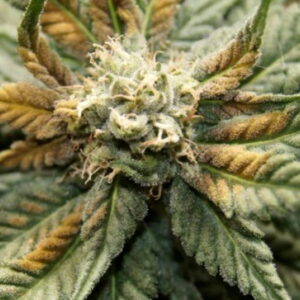
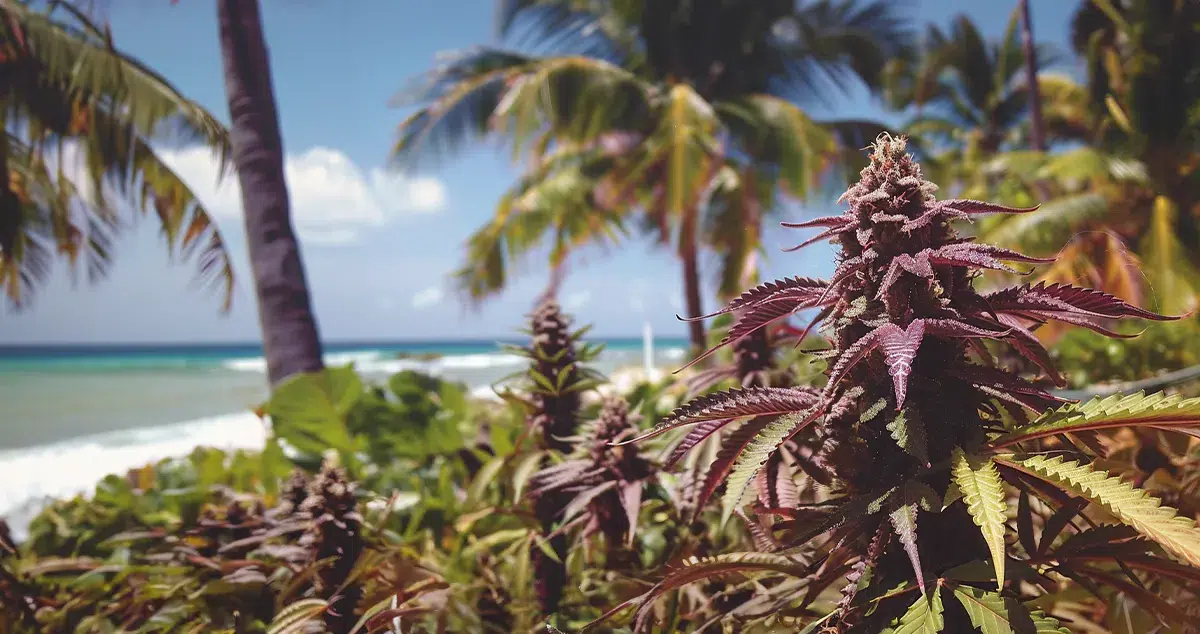
Tropical Runtz buds are usually described as oversized and chunky, with forest-green coloring, thick orange pistils, and a heavy frost of white crystal trichomes. The nugs take a fat, conical shape and carry a dense, resinous coat that signals the strain’s potency at a glance.
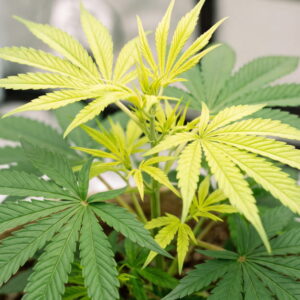
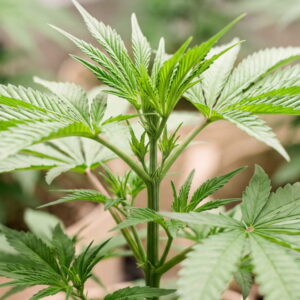
Through the vegetative and early flowering stages, the plant holds bright shades of green. In late flowering, it can shift into deep purple hues that run through the leaves and stems, while the buds along the main branches gather toward the top into large, trichome-drenched colas.
Growing the Tropical Runtz Strain
Tropical Runtz grows as an easy, compact cultivar suited to warm, sunny climates. It flowers in roughly 8 to 10 weeks indoors with an early to mid-October harvest outdoors where cultivation is permitted. It inherits a healthy tolerance for less-than-ideal conditions from the Runtz side of the family, which makes it forgiving for growers still building experience.
The plant stays compact, responds well to low-stress training, and shows strong resistance to disease. Yields run above average in good conditions both indoors and out, which is part of why it stays popular with home growers. Its tropical aroma intensifies through flowering, so growers who care about odor plan airflow accordingly.
Tropical Runtz seed types and grow-from-seed expectations vary by format, with feminized the usual starting point and each option suiting different setups, experience levels and harvest goals. Autoflower seeds suit shorter seasons and faster turnarounds, while feminized seeds keep an all-female crop for growers focused on flower.
Growing the Tropical Runtz Strain Indoors
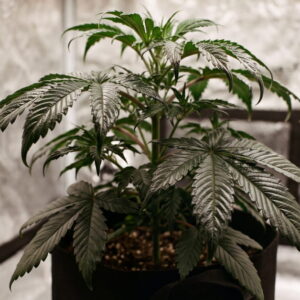
Tropical Runtz grows well indoors thanks to its compact size and strong response to low-stress training, which lets growers use limited tent space efficiently. It flowers in roughly 8 to 10 weeks and holds bright green foliage that can turn purple late in the cycle.
Indoor yields tend to land above average for a plant this size when conditions are dialed in. Good airflow matters because the tropical, fruity aroma grows pronounced through flowering, so steady ventilation keeps the grow space manageable.
Growing the Tropical Runtz Strain Outdoors
Tropical Runtz grows outdoors in warm, sunny climates, with harvest usually arriving in early to mid-October and the plant staying compact at maturity. Full sun and rich, well-draining soil suit it best, and its disease resistance helps it shrug off the stresses an outdoor season brings.
Outdoor plants can deliver generous yields under strong light and a long enough warm-weather window. In cooler or shorter-season regions, an autoflowering option finishes faster and sidesteps a late-season harvest that the local climate might cut short.
Tropical Runtz Seeds
Tropical Runtz seeds let growers cultivate this cultivar from start to harvest, with seed type, pack size and grow setup affecting plant behavior, flowering time and yield. Eligible adult growers, where lawful, can explore ILGM cannabis seeds in the formats that match their space and season:
- Feminized seeds — the usual starting point, producing an all-female crop focused on flower
- Autoflowering options — trade a little control for speed and a faster overall cycle
Tropical Runtz flowering time, yield expectations and grow difficulty vary by format, with each suiting different setups, climates and experience levels.
Tropical Runtz vs Similar Strains
Compare Tropical Runtz with similar strains if you want a different effect profile, flavor direction, potency level or genetic background. The cultivars below share lineage, flavor, or effect traits with Tropical Runtz.
Runtz
- Best for: Balanced hybrid fans
- Main difference: Direct parent with more balanced effects
- Flavor: Candy, fruity
- Potency: High
- Choose this if: You want the original candy-hybrid backbone
Zkittlez
- Best for: Relaxation seekers
- Main difference: More indica-leaning with calmer effects
- Flavor: Sweet berry, candy
- Potency: Medium-high
- Choose this if: You prefer a mellower, fruit-forward calm
Gelato #33
- Best for: Dessert-flavor fans
- Main difference: Creamier profile with a more even high
- Flavor: Sweet, creamy
- Potency: High
- Choose this if: You like dessert terpenes over tropical fruit
Tropicana Cookies
- Best for: Daytime energy
- Main difference: More citrus-forward with a stronger sativa lean
- Flavor: Orange, citrus
- Potency: High
- Choose this if: You want a brighter, citrus-driven sativa lean
FAQs About the Tropical Runtz Strain
What Strain Is Tropical Runtz?
Tropical Runtz is a sativa-dominant hybrid created by Exotic Genetix from a cross of Runtz and Tropic Truffle. It is known for sweet tropical-candy flavor, an energizing-then-calming high and high THC, and it has earned multiple cannabis cup awards in the sativa flower category.
Is Tropical Runtz Indica or Sativa?
Tropical Runtz is most often classified as a sativa-dominant hybrid, with strong backing from its sativa-category cup wins. Some sources describe it leaning indica once the body effects arrive, so classification varies by breeder and phenotype rather than following one fixed ratio.
How Strong Is Tropical Runtz?
Tropical Runtz is potent, with THC commonly listed up to about 24%. That places it in experienced-smoker territory, though beginners can enjoy it in moderation. Reported strength varies between growers and samples, so starting small is the safest approach.
What Are the Effects of Tropical Runtz?
Tropical Runtz is commonly reported as energizing, uplifted, talkative and happy at first, easing into a calmer, more relaxing body buzz later. The onset is described as fast-acting and the effects as long-lasting, which makes it a versatile choice across the day.
What Does Tropical Runtz Taste Like?
Tropical Runtz tastes like sweet tropical candy with sour citrus, leading with ripe mango, pineapple and orange notes. An undercurrent of earthy spice and fuel balances the sweetness, giving the flavor depth rather than a flat candy profile.
What Does Tropical Runtz Smell Like?
Tropical Runtz smells of sour tropical citrus and fresh fruity banana, layered over earthy herbs, flowery spice and a peppery edge. Some describe a faint savory cheese note underneath, which adds to the strain’s complex, fruit-forward aroma.
What Are the Genetics of Tropical Runtz?
Tropical Runtz descends from Runtz and Tropic Truffle, bred by Exotic Genetix. Runtz contributes high-THC potency and easy-to-grow genetics, while Tropic Truffle adds vivid gassy-citrus terpenes and a slight sativa lean, producing a flavorful, potent offspring.
What Terpenes Are in Tropical Runtz?
Tropical Runtz is commonly associated with limonene, linalool and myrcene, with some sources noting caryophyllene and trans-nerolidol. Limonene drives the citrus brightness, linalool the floral softness and myrcene the earthy base, matching the strain’s flavor and aroma.
How Long Does Tropical Runtz Take to Flower?
Tropical Runtz usually flowers in roughly 8 to 10 weeks indoors, with outdoor harvest in early to mid-October. Exact timing varies by setup and phenotype, and autoflowering options finish on a faster overall cycle.
Is Tropical Runtz Easy to Grow?
Yes. Tropical Runtz is considered an easy, beginner-friendly grow that inherits Runtz’s hardiness and disease resistance. Its compact size and strong response to low-stress training make it forgiving in tight spaces and tolerant of less-than-perfect conditions.
Can Tropical Runtz Grow Outdoors?
Yes. Tropical Runtz grows outdoors in warm, sunny climates with a harvest in early to mid-October. Full sun and rich, well-draining soil suit it best, and its disease resistance helps it handle outdoor stresses, with cooler regions better served by faster autoflowering options.